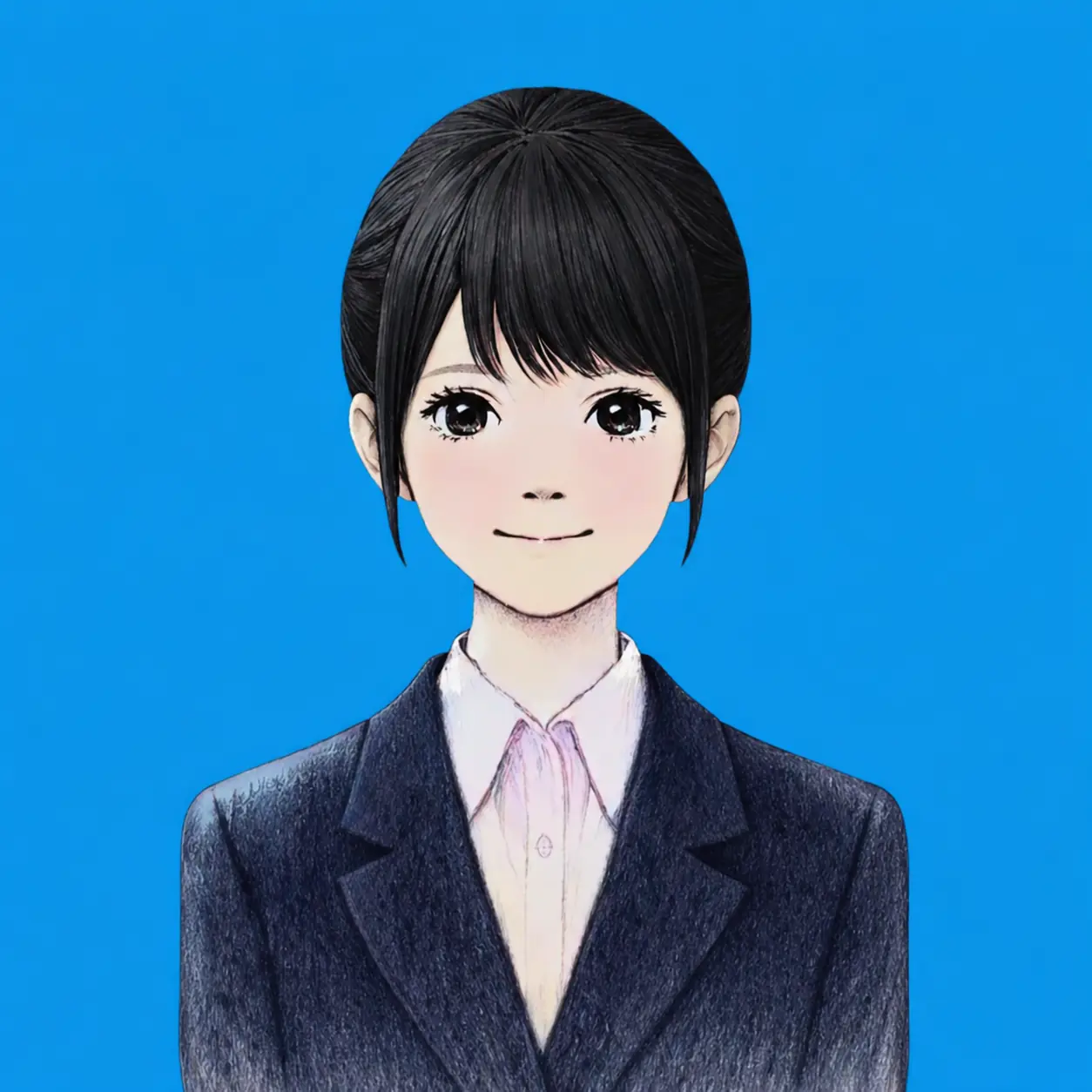
Yantou Quanhuo :Blasting Away Ordinary and Holy, Free and Easy to Lift and Press with Both Hands
From Shoyoroku, Case 22: Yantou Bows to the Katsu
擧。巖頭到徳山。跨門便問。是凡是聖。[這賊]山便喝。裂破髑髏]頭禮拜。[未當好心]洞山聞云。若不是豁公。大難承當。[厚幣甘言]頭云。洞山老漢不識好惡。[却又著忙]我當時一手擡一手捺。[我豈不知]
=From Shoyoroku, Case 22: Yantou Bows to the Katsu Classical Chinese Original Text
舉(こ)す。巌頭(がんとう)、徳山(とくさん)に到(いた)り門(もん)に跨(またが)って便(すなわ)ち問(と)う、是(こ)れ凡(ぼん)か是(こ)れ聖(しょう)か。[這(こ)の賊(ぞく)] 山(さん)便(すなわ)ち喝(かっ)す。[獨樓(どくろ)を裂破(れっぱ)す] 頭(とう)、禮拜(らいはい)す。[未(いま)だ好心(こうしん)に當(あた)らず] 洞山(とうざん)聞(き)いて云(い)わく、若(も)し是(こ)れ豁公(かっこう)にあらずんば、大(おおい)に承當(じょうとう)し難(がた)かりしたらん。[幣(へい)を厚(あつ)うし言(こと)を甘(あま)くす] 頭(とう)云(い)わく、洞山老漢(とうざんろうかん)好惡(こうお)だも知らず。[却(かえ)って又(また)忙(ぼう)に着(つ)く] 我(わ)れ當時(そのかみ)、一手擡(いっしゅたい)、一手捺(いっしゅなつ)と。[我(わ)れ豈(あに)知(し)らざらんや]
From Shoyoroku, Case 22: Yantou Bows to the Katsu Kanbun reading method of Classical
Case: Yantou arrived at Deshan’s.Straddling the threshold, he immediately asked:
Yantou: Is this ordinary or holy? [This thief!]
Deshan immediately shouted Katsu! [Shattering the skull]
Yantou made a bow. [It is never from his true heart]
Dongshan heard of this and said:
Dongshan: If it were not Quanhuo, it would have been extremely difficult to withstand it. [Lavish gifts and sweet words]
Yantou: That old foolish Dongshan does not understand at all. [Yet again, getting all flustered]
Yantou: At that time, I would hold up with one hand and press down with the other. [How could I not know?]From Shoyoroku, Case 22: Yantou Bows to the Katsu Modern Meaning
Glossary: What are the Buddhist and Zen terms used in this article?
- 巌頭拝喝 (Yantou Bows to the Katsu): This is a Zen dialogue between two Zen masters, 巌頭全豁 (Yantou Quanhuo) and 徳山宣鑑 (Deshan Xuanjian), while Yantou bows to the katsu (喝) of Deshan.
- 坐具 (Zagu): This is a mat for monks. Monks sit on it or bow on it.
- 験主問 (Kenshumon, A Question for the Master): This is a question. A monk uses it to test the state of the master.
- 賊 (Zoku, a thief): This is a word which is used to praise a great Zen master. In daily life, it means a thief.
- 二見対待 (Dualistic Opposition): A perspective that divides and contrasts things into two categories, such as “right or wrong.”
- 向上 (Kojo): This is the action of going toward and going beyond the world of absolute equality (the state of enlightenment). This world is beyond all differences and distinctions.
- 向下 (Koge): This is the action of practicing in the world of relative distinction (the actual world). In this world, individual differences, good and evil, and other contrasts exist.
- 向上底 (Kojo-tei): This is “the world of absolute equality (the state of enlightenment) itself” which is beyond all differences. It also means the world itself that goes beyond that state.
What are the characters in Yantou Bows to the Katsu?: Yantou Quanhuo and Deshan Xuanjian
The people in the case are 巌頭全豁 (Yantou Quanhuo), 徳山宣鑑 (Deshan Xuanjian). 洞山良价 (Dongshan Liangjie) makes a comment on the dialogue between these two people.
Who was Yantou Quanhuo?: An Unprecedented Zen master who guides his master
- Birthplace and Family Name: He was from Quanzhou (now Quanzhou City, Fujian Province). His secular surname was Ke.
- Training History: When he was young, he shaved his head under Gigou of Qingyuan, and he received the full precepts at Baoshou Temple in Chang’an. He studied sutras and precepts widely, and he traveled around various Zen dojos. He met 雪峰義存 (Xuefeng Yicun) and 欽山文邃 (Qinshan Wunsui), who became his friends for life, and he deeply related with them. He visited 臨済義玄 (Linji Yixuan) from Daci Mountain in Yuhang, but Linji had already died when he arrived. Therefore, he received teachings from 仰山慧寂 (Yangshan Huiji).
- Process of Enlightenment: He went to Deshan Xuanjian and received his Dharma transmission.
- Base of Activity: Yantou in Ezhou (or Langzhou). Later, he built a hut on Garyu Mountain in Dongting, and many Zen practitioners gathered there.
- Death: On April 8 in the third year of Guangqi (887), he was attacked by thieves. He gave a great cry that tore the sky, and he passed away at the age of sixty.
- Posthumous Title: 清厳大師 (A pure and strict master) (景徳傳燈録 卷第十六(No. 2076 道原纂) in Vol. 51).
Who was Deshan Xuanjian?: a severe Spartan Zen master who smashes doubts with strikes without asking questions
- Birthplace and Original Family Name: He was a person from Jiannan (around present-day Sichuan Province), and his secular surname was Zhou.
- Training History: He entered the priesthood when he was young and received the full precepts. He deeply studied the Vinaya (monastic rules) and understood the meaning of various sutras. Because he was especially good at lecturing on 金剛経 (the Diamond Sutra), people called him ‘Zhou the Diamond’ at that time.
- Deshan heard about the rise of Zen Buddhism. On his way on a trip with the intention of challenging a Zen dojo, he met an old woman (see below). After that, he achieved great enlightenment under 龍潭崇信 (Longtan Chongxin).
- Base of Activity: He lived in Leiyang for thirty years. During the persecution of Buddhism by Emperor Wuzong of the Tang dynasty (the Huichang Persecution), he took refuge in a stone room on Mt. Dofu. In the early Dazhong era, Xue Tingwang, the governor of Wuling, rebuilt his temple, and he was active here.
- Main Teaching: He thoroughly did not rely on words or letters, and he was famous for ‘Deshan’s stick,’ which hit practitioners with a stick. He maintained a strict position: ‘In our school, there are no words. We do not give even a single true dharma to people.’ ‘Deshan’s stick,’ along with ‘Linji’s katsu’ by Linji Yixuan, later became a symbol of Zen Buddhism.
- Death: He passed away on December 3 in the sixth year of Xiantong of the Tang dynasty (865). His age was eighty-six, and his Dharma age was sixty-five.
- Posthumous Title: 見性大師 (Master of Attaining Enlightenment)(景徳傳燈録 卷第十八(No. 2076 道原纂) in Vol. 51).
In Case 28 of the ‘Gateless Gate’ (無門関), the famous meeting between Deshan Xuanjian and an old woman is told as follows.
Deshan Xuanjian, who was famous for his commentaries on the Diamond Sutra, felt strong anger toward the Zen teachings of transmitting enlightenment without relying on words or letters. He set out on a journey to challenge Zen dojo, carrying loads of commentaries on the Diamond Sutra. When Deshan was walking along a road in Lizhou, he met an old woman selling light refreshments by the roadside. The old woman asked Deshan, “In the Diamond Sutra, it says: ‘The past mind cannot be grasped, the present mind cannot be grasped, and the future mind cannot be grasped.’ Which mind are you trying to refresh?” Confronted with this question, Deshan was unable to say a single word in reply.
When Deshan asked the old woman, “Is there an excellent Zen master near here?”, she told him, “Master Longtan is about 2.8km ahead.” So Deshan later visited Master Longtan. One night, Longtan lit a paper candle and tried to hand it to Deshan. At the exact moment Deshan was about to take it, Longtan blew out the flame with a puff. In that instant, Deshan suddenly reached deep enlightenment. The next day, Deshan took out the commentaries on the Diamond Sutra that he had carefully carried with him, raised a torch, and burned them all.( (禪宗無門關 無門關(宗紹編 in Vol. 48))).
Who was Dongshan Liangjie?: A philosophical Zen master who deeply meditates and quietly reflects
- Birthplace and Original Family Name: He was a person from Kuaiji, and his secular surname was Yu.
- Childhood: When he was young, he was learning the Heart Sutra with his teacher. When he reached the part saying “there are no eyes, ears, nose, tongue, body, or mind,” he asked his teacher, “I actually have eyes, ears, nose, tongue, and body. Why does the sutra say there are none?” His teacher was surprised by his unusual talent and said, “I am not able to be your teacher.” He sent him to Zen Master Lingmo of Mt. Gexue, and he became a monk there.
- Training History: He shaved his head at Mt. Gexue and received the full precepts at Mt. Song at the age of twenty-one. After that, he traveled around various places and first met 南泉普願 (Nanquan Puyuan). At the memorial service for 馬祖道一 (Mazu Daoyi), Nanquan asked, “Tomorrow we will make an offering for Mazu. Will Mazu really come?” Liangjie answered, “He will come if there is a suitable companion.” Nanquan praised his talent greatly. Next, he visited 潙山霊祐 (Guishan Lingyou) and asked about 南陽慧忠 (Nanyang Huizhong)’s teaching that inanimate things preach the Dharma. Guishan avoided speaking with words and advised him to visit 雲巌曇晟 (Yunyan Tansheng).
- Process of Enlightenment: Liangjie practiced under Yunyan Tansheng. When Liangjie asked about the true essence of Yunyan, Yunyan answered, “Just this is it.” Later, when he saw his own reflection in the water of a river, he understood the true meaning of Yunyan’s words and reached great enlightenment.
- Base of Activity: He taught students at Mt. Xinfeng. After that, he moved to Mt. Dong in Gaoan, Yuzhang (present-day Yichun City, Jiangxi Province, Yunzhou at that time), and he made the Zen style flourish greatly.
- Main Teaching: The mind and body of a person who enters the priesthood should not stick to external things. This is true practice. The theory of the “Five Ranks” (Five Ranks of the Partial and Complete / Five Ranks of Lord and Vassal), which he systematized with his disciple 曹山本寂 (Caoshan Benji), became the standard of Zen training, and later became the foundation of the Soto school style.
- Death: He passed away on March 8 in the tenth year of Xiantong of the Tang dynasty (869). His age was sixty-three, and his Dharma age was forty-two.
- Posthumous Title: 悟本大師 (Master of Original Enlightenment)(景徳傳燈録 卷第十五(No. 2076 道原纂) in Vol. 51).
Dharma Lineage Chart
- 石頭希遷…龍潭崇信ー徳山宣鑑ー巌頭全豁
- 石頭希遷…薬山惟儼ー雲巌曇晟ー洞山良价
What was the meeting between Yantou and Deshan?: Deshan Acknowledged Yantou
The main case looks like the dialogue of their first meeting, but it was not their first meeting. Therefore, let us introduce the episode of their first meeting.
When Yantou first visited Deshan, he spread his zagu (mat) in the Dharma hall. Deshan quickly threw the zagu down the stairs with his stick. Yantou did not lose his calm. He went down the stairs, picked up the zagu, and left the place as he was.
The next day, Yantou visited Deshan again to greet him. Deshan asked him, ‘Where did you learn such empty tricks?’ Yantou answered, ‘I do not use tricks to deceive myself.’ Then Deshan said, ‘In the future, you will shit on the head of this old monk (you will surpass this old monk).’
Deshan saw this extraordinary attitude of Yantou and recognized his true ability.
What is the Katsu of Deshan Xuanjian?: It blows away ordinary and holy
One day, Yantou went up to Deshan’s room. He stepped over the threshold of the entrance and put one foot inside. He asked, “Is this ordinary or holy?” If the master answered ‘ordinary,’ he would pull back his foot and stand outside. If the master answered ‘holy,’ he would put both feet inside and stand. This question can mean ‘Do you see me as ordinary or holy?’ It can also mean that he was testing the state of the master: ‘Is your state ordinary or holy?’ In this situation, it is a so-called 験主問 (kenshumon, a question to test the master). 万松行秀 (Wansong Xingxiu) commented, [This thief!] In Zen dialogues, 賊 (thief) is a common word which is used to praise an extraordinary Zen practitioner. Then, in this case, is Deshan a thief? Or is Yantou a thief?
Deshan did not say ‘ordinary’ or ‘holy.’ He answered with a great katsu! This one katsu means [Shattering the skull!]. In other words, it blew away delusions and attachments across dualistic opposition, such as ordinary or holy, and delusion or enlightenment. It also completely wiped away even the Zen thought of no-mind that wants to erase those attachments. Even Yantou must have felt that his skull was broken.
Yantou did not shoot a second question, and he made a bow. However, Wansong commented, [It is never from his true heart]. Wansong did not seem to be satisfied. He said that this bow was strange and unsatisfactory. Here was the meeting of a thief (Deshan) and a thief (Yantou).
What is Yantou Quanhuo’s true intent?: Complete freedom of Kojo and Koge
The dialogue between Yantou and Deshan ended with this. It was simple. However, 洞山良价 (Dongshan Liangjie), who was Yantou’s former master, heard about this dialogue. Dongshan praised them: “If it were not Quanhuo (Yantou), it would have been extremely difficult to withstand it.” However, Wansong evaluated Dongshan’s praise as [Lavish gifts and sweet words]. When Yantou heard Dongshan’s praise, he insulted him: ‘That old foolish Dongshan does not understand at all.’ Wansong commented: [Yet again, getting all flustered]. This means that Yantou was swayed by Dongshan’s sweet words, and his mind showed confusion.
Yantou said, “At that time, I would hold up with one hand and press down with the other.” This means Kojo and Koge. Yantou’s opinion was like this: “I just bowed and left after Deshan’s katsu. This was not a complete agreement. My bow was after I saw myself and him clearly. Kojo is holy, and Koge is ordinary. Dongshan does not understand this.” We can say that Yantou is still young because he said this.
Wansong commented, [How could I not know?]. This comment means this: we do not need to explain Kojo, Koge, delusion and enlightenment, or ordinary and holy. Dongshan already knows what Deshan’s katsu and Yantou’s bow mean. This comment shows that Yantou was caught by Dongshan’s word, and he had to spit out mud (he had to show his true thoughts). In other words, Yantou, Deshan, and Dongshan were all thieves (賊).
Deshan broke dualistic opposition. This action is Kojo. Yantou held up with one hand and pressed down with the other. This shows the complete freedom of Kojo and Koge. Dongshan gave Yantou a chance to spit out mud (to show his true thoughts). In other words, they all did these things because they understood everything.
The following case cuts into this destruction of dualistic opposition from a different point of view. Please read it.
Related Article: Shoyoroku Case 18: Zhaozhou’s Dog — Smash the Logic and Plunge Headfirst into the Reality of the Here and Now
What is the core of Yantou Bows to the Katsu in Shoyoroku Case 22?: Complete Freedom of Kojo and Koge
- Yantou asked, “Is this ordinary or holy?”
- Deshan gave a katsu, he blew away ordinary and holy.
- Yantou made a bow, this action showed the complete freedom of Kojo and Koge.
My Experience: Do We Need to Respect Our Teachers?
Until the Showa period, teachers were absolute, and students had no choice but to obey them. However, from the late Showa period, some students began to rebel against teachers. In the Reiwa period, it feels like students hold power as consumers. Then, are teachers always right, and do we need to obey them?
To review the summary of this koan briefly, Deshan showed the absolute truth (there is no ordinary or holy), and Yantou showed free and flexible action with the help of Dongshan. To use a metaphor, this means that although absolute truth exists, we live in society and must live under our roles as teachers and students.
Well, I think the interesting point for everyone when looking at this dialogue is that Yantou criticizes Dongshan, who was his former master. This is not unusual in Zen. This is because Zen welcomes students to surpass their masters. I myself experienced being a student just like all of you, and further experienced Zen training at a dojo, and now I do teaching work.
Therefore, I often think that if we have mutual respect as human beings, excessive respect for roles is not necessary. This is because I was sometimes told at a Zen dojo, “You do not have enough respect.”
And when I think about those people carefully, people who spoke in that way did not have confidence in themselves, and they maintained their self-esteem only with the help of their role as a teacher. I think they became anxious because I did not do excessive things to keep that role, such as flattering the teacher and lifting him up. I think that such flattering and actions for keeping roles, like hiding mistakes, are not necessary.
Then, what we need is to devote ourselves to our roles and change the function of those roles according to the other person and the situation.
In other words, instead of holding onto the position of being a teacher or a student, each person devoting themselves to their role leads to the free and flexible action that Yantou talks about.
How Can Zen Teachings Be Applied to Modern Life?: Not depending on roles, but devoting oneself to roles
Then, what does it mean not to depend on roles, but to devote oneself to roles? I gave concrete examples below.
- Concrete examples of teachers and students devoting themselves to their roles:
- Teachers teach study.
- Students study.
- Teachers prepare classes well and explain clearly.
- Students ask questions about things they do not understand.
- Teachers grade tests and assignments fairly.
- Students submit assignments by the deadlines.
- Teachers adjust the pace according to the students’ level of understanding.
- Students do not talk during class and listen to the talk.
- Teachers transmit necessary knowledge and skills accurately.
- Students do preview and review by themselves.
- Concrete examples of depending on roles:
-
- Hiding the teacher’s mistakes.
- Giving excessive flattery to the teacher.
- Ignoring the teacher’s mistakes without pointing them out.
- Believing unconditionally that “the teacher is right because he is a teacher.”
- Trying to improve grades or evaluations by pleasing the teacher.
- Judging only by the role that “what the teacher says is absolute.”
- Just obeying even if the teacher gives wrong instructions.
- Changing and reporting facts to protect the teacher’s position.
- Waiting passively, thinking, “I am a student, so the teacher should teach me everything.”
- Not thinking for oneself, thinking, “I just have to do what the teacher says.”
- Blaming only the teacher for bad grades, saying, “The teacher’s way of teaching is bad.”
-
- Concrete examples of respecting each other:
- Greeting each other.
- Concentrating on study.
- Keeping promised times so as not to waste the other person’s time.
- Listening carefully and talking calmly even if opinions are different.
- Recognizing the other person’s efforts and ingenuity.
- Pointing out the other person’s mistakes as facts without making personal attacks.
 Aoiちゃん
Q&A
- Q: Why did Wansong comment, “[How could I [Dongshan] not know?]”? What is it that he knows?
- A: Because Dongshan fully understood what Deshan's katsu and Yantou's bow truly meant. In this case, Deshan, Yantou, and Dongshan all share a common understanding of shattering dualistic opposition. However, our actual human lives are built on the very premise of dividing things into two. Therefore, Yantou expressed how to utilize this truth in reality through his bow. Furthermore, supported by Dongshan’s prompting, Yantou expressed this dynamic application of the truth through his own words: “holding up with one hand and pressing down with the other.”
Mind Weather before AI comments?
 Oskardさん
 Grok
 Gemini君
 Claude様Aoiちゃん
 GPTさん