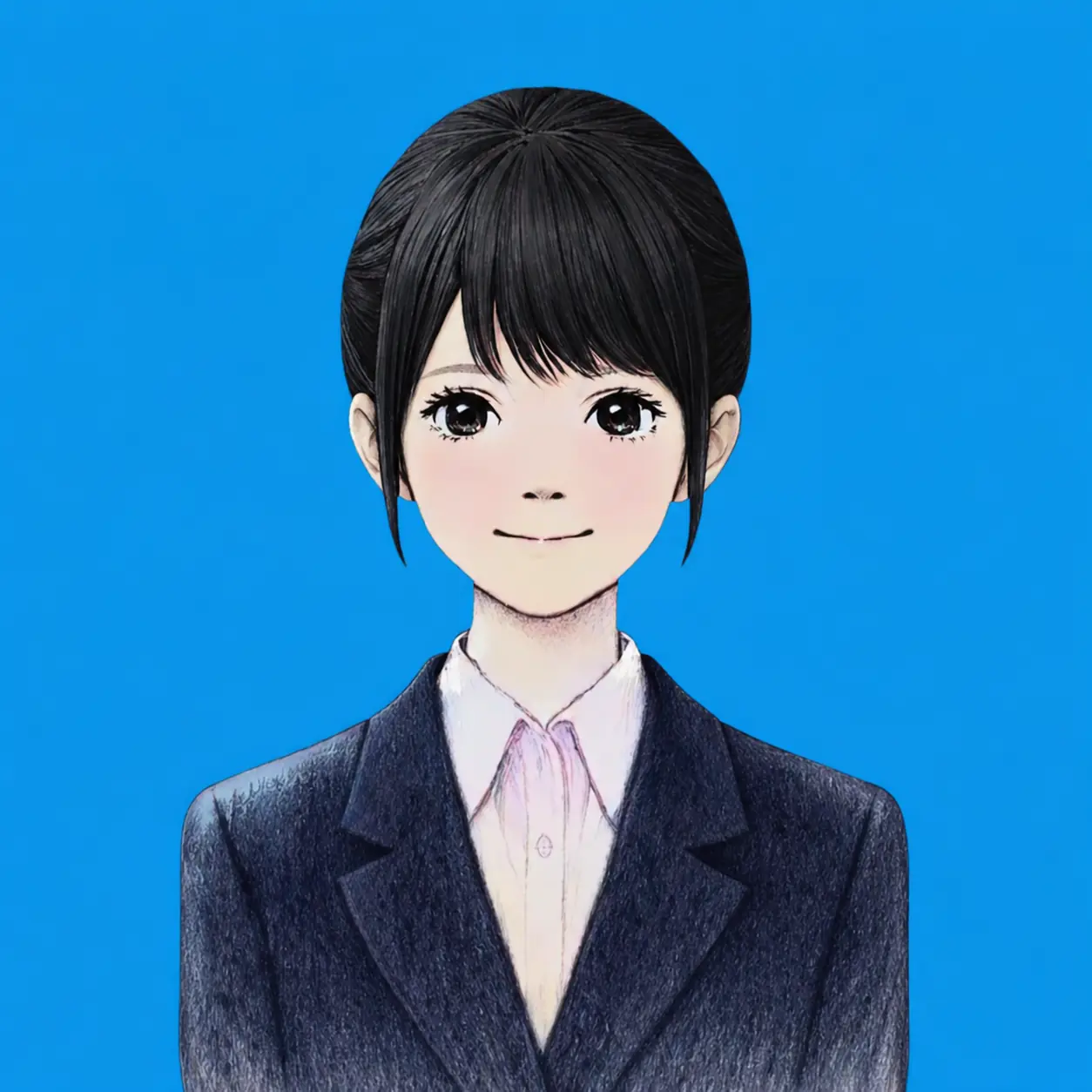
Yunyan Tansheng: Zazen and Samu are one
From Shoyoroku, Case 21: Yunyan Sweeping the Ground
擧。
雲巖掃地次[沙彌行童不得氣力道]
吾云。太區區生[埋兵挑鬥]
巖云。須知有不區區者[可惜話作兩橛]
吾云。恁麼則有第二月也[豈止第二百千萬箇]
巖提起掃帚云。這箇是第幾月[水晶宮裏出頭來]
吾便休去[盡在不言中]
玄沙云。正是第二月[一人傳虚萬人傳實]雲門云。奴見婢殷勤[隨邪撲
簸箕]From Shoyoroku, Case 21: Yunyan Sweeping the Ground Classical Chinese Original Text
舉(こ)す。雲巖(うんがん)掃地(そうち)の次(つい)で、[沙彌(しゃみ)行童(あんずん)氣力(きりょく)を得(え)ず]道吾(どうご)云(い)わく、太區區生(たいくくせい)。[兵(へい)を埋(うづ)んで鬪(たたか)いを挑(いど)む]巖(がん)云(い)わく、須(すべか)らく區區(くく)ならざる者(もの)有(あ)ることを知(し)るべし。[惜(お)しむ可(べ)し話(わ)兩截(りょうけっ)と作(な)ることを]吾(ご)云(い)わく、恁麼(いんも)ならば則(すなわち)第二月(だいにげつ)有(あ)りや。[豈(あ)に第二(だいに)に止(とどま)らんや、百千萬箇(ひゃくせんまんこ)]巖(がん)。掃箒(そうしゅう)を提起(ていき)して云(い)わく、這箇(しゃこ)は是(こ)れ第幾月(だいいくげつ)ぞ。[水晶宮裏(すいしょうきゅうり)より出頭(しゅっとう)し來(きた)る]吾(ご)便(すなわ)ち休(きゅう)し去(さ)る。[盡(ことごと)く不言(ふげん)の中(うち)に在(あ)り]玄沙(げんしゃ)云(い)わく、正(まさ)に是(れ)第二月(だいにげつ)。[一人(いちにん)虛(きょ)を傳(つた)うれば、萬人(ばんにん)實(じつ)を傳(つた)う]雲門(うんもん)云(い)わく、奴(ぬ)は婢(ひ)を見て殷勤(いんぎん)。[邪(じゃ)に隨(したが)って簸箕(ひき)を撲(う)つ]From Shoyoroku, Case 21: Yunyan Sweeping the Ground Kanbun reading method of Classical
To cite:
When Yunyan was sweeping the ground, [Novices and young acolytes lack the strength and energy]
Daowu: Why are you working so busily? [Hiding ambush troops to spark a fight]
Yunyan: You should know that there is one in this world who does not work busily. [What a pity—such a good statement has been split right into two]
Daowu: If so, wouldn’t that create a second moon? [Far beyond just a second moon—it creates hundreds, thousands, and tens of thousands of moons]
Yunyan lifted his broom and said,
Yunyan: Then, which moon is this? [Sticking its head out from the depths of the Crystal Palace]
Daowu silently left the scene. [Everything is fully expressed within silence beyond words]
Xuansha: That is precisely the second moon. [When one person tells a lie, ten thousand spread it as truth]
Yunmen: A male servant bowing politely to a maidservant. [Dragged along by another’s error, beating the winnowing basket in rhythm together]From Shoyoroku, Case 21: Yunyan Sweeping the Ground Modern Meaning
Glossary: What are the Buddhist and Zen terms used in this article?
- 雲巌掃地 (Ungan Souchi, Yunyan Sweeping the Ground): This is a famous dialogue between two Zen masters, 雲巌曇晟 (Yunyan Tansheng) and 道吾円智 (Daowu Yuanzhi), while they are cleaning the ground.
- 第二の月 (The Second Moon): A metaphor for a wrong view that appears in 首楞厳 (the Shurangama Sutra) and 円覚経 (the Complete Enlightenment Sutra).
- 水晶宮 (The Crystal Palace): Originally one of the Taoist dragon palaces, but in Zen, it is used as a metaphor to symbolize a state of mind beyond words and thoughts.
- 作務 (Samu, manual labor): Physical work such as cleaning or farming, performed as a form of Zen practice equal in importance to zazen.
- 三昧 (Zanmai, Samadhi): A deep state of meditative concentration or mental absorption.
What are the characters in Yunyan Sweeping the Ground?: Yunyan Tansheng and Daowu Yuanzhi
The main people in this case are 雲巌曇晟 (Yunyan Tansheng) and 道吾円智(Daowu Yuanzhi). 雲門文偃 (Yunmen Wenyan) and 玄沙師備 (Xuansha Shibei) make comments about their dialogue.
Who was Yunyan Tansheng?: introspective Zen master who quietly observes the sounds of all things
- Birthplace and Family Name: He was born in Jiangxi Province, and his family name was Wang.
- Training History: He became a monk at a young age. First, he served Master 百丈懐海 (Baizhang Huaihai) as an attendant for 20 years. After Baizhang passed away, he studied under Master 薬山惟儼 (Yaoshan Weiyan) and achieved enlightenment.
- Base of Activity: After getting enlightenment, he lived on Mount Yunyan in Hunan Province and spread his teachings.
- Death: He passed away in 841. His famous teaching is: “There is a son in the family. When someone asks him, he can always answer.” This means a person who wakes up to the true self can freely and correctly answer any question in any situation (景徳傳燈録 卷第十四(No. 2076 道原纂) in Vol. 51).
By the way, the kanji 巌 in Yunyan Tansheng’s name uses the old character style, not the common character 岩 (rock). Because it has already been used this way for a long time, it was not changed.
Who was Daowu Yuanzhi?: guidance-style Zen master who points to the truth with sharp wit
- Birthplace and Family Name: He was born in Jiangxi Province, and his family name was Zhang.
- Training History: He studied under Master Pan and received the full monk precepts at the age of twenty. After that, he joined Master 薬山惟儼 (Yaoshan Weiyan)’s group and secretly received the proof of enlightenment.
- Death: He passed away in 835 at the age of sixty-seven, having been a monk for forty-six years.
- Posthumous Title: 修一大師 (Master practicing oneness)(景徳傳燈録 卷第十四(No. 2076 道原纂) in Vol. 51).
Because Yunyan and Daowu belonged to the same master, Yaoshan Weiyan, they were very close. There is a famous dialogue recorded between them about Guanyin’s ‘Great Compassion Thousand-Hand Eye’ (known as ‘The whole body is hands and eyes’)(景徳傳燈録 卷第十四(No. 2076 道原纂) in Vol. 51).
Who was Xuansha Shibei?: a practical Zen master who rose to greatness through his own hard work
- Birthplace and Family Name: He was born in Fujian Province, and his family name was Xie.
- Childhood: When he was young, he liked fishing and fished on a small boat in the Nantai River.
- Becoming a Monk and Training: In his thirties, he suddenly wanted to become a monk and left his fishing boat. He shaved his head under Master Fuyong Lingxun and received the full monk precepts from Master Daoxuan in Jiangxi Province.
- Relationship with Xuefeng: He and 雪峰義存 (Xuefeng Yicun) were like brothers. Xuefeng called him “備頭陀” (Bidutha, the ascetic monk Bi) because of his hard ascetic practices.
- Enlightenment: He helped Xuefeng build the temple on Mount Xianggu, asked for teachings day and night, and achieved enlightenment by reading 楞厳経 (the Shurangama Sutra).
- Base of Activity: First, he lived at Puying Temple in Meixi, and later moved to Mount Xuansha. He received deep support from Wang Shenzhi (the ruler of Min), and had more than 800 disciples.
- Main Teaching: “The entire universe is a single bright pearl” (this entire world is one shining treasure).
- Death: He passed away on November 27, 908, at the age of seventy-four, having been a monk for forty-four years.
- Posthumous Title: 宗一大師 (Master Principal Unity) (景徳傳燈録 卷第十八(No. 2076 道原纂) in Vol. 51).
Who was Yunmen Wenyan?: A brainy Zen master who delivers a sharp, single word
- He was from Jiaxing, Zhejiang province (currently Jiaxing City, Zhejiang Province), and his secular family name was Zhang.
- He studied under 睦州道蹤 (陳尊宿, Muzhou Daozong, Chen Zunsu) in Muzhou and clarified the great meaning of Zen.
- He became a dharma heir of 雪峯義存 (Xuefeng Yicun).
- He succeeded 霊樹如敏 (Lingzhu Rumin) in Shaozhou (Guangdong Province) and became the abbot.
- He lived at Guangtai Temple on Mount Yunmen in 韶陽 (Shaozhou), and was also called 韶陽禅師 (Zen Master Shaozhou).
- Later, Yunmen became the founder of 雲門宗 (Yunmen school).
- Posthumous Title: 匡真禅師 (Master of Righteous Truth)(景徳傳燈録 卷第十九(No. 2076 道原纂) in Vol. 51).
Dharma Lineage Chart
- 青原行思ー石頭希遷ー薬山惟儼ー雲巌曇晟ー洞山良价
- 青原行思ー石頭希遷ー薬山惟儼ー道吾円智ー石霜慶諸
- 青原行思ー石頭希遷…徳山宣鑑ー雪峰義存ー玄沙師備ー地蔵桂琛ー法眼文益
- 青原行思ー石頭希遷…徳山宣鑑ー雪峰義存ー雲門文偃
This lineage is broadly divided into two styles of Zen.
- 藥山系(曹洞宗の源流): The source of the Soto sect, Characterized by a meticulous approach that finds truth in subtle nuances and everyday behavior.
- 徳山系(玄沙・雲門): Characterized by frequent use of sharp methods, such as pushing people away or cutting through thoughts with a single word.
Chronological Order
- 雲巖・道吾 (Yunyan and Daowu)’s Dialogue: Around 810 to 841
- 玄沙師備 (Xuansha Shibei)’s Commentary: Around 870 to 908
- 雲門文偃 (Yunmen Wenyan)’s Commentary: Around 920 to 949
- 万松行秀 (Wansong Xingxiu)’s Commentary: Around 1223
What is Yunyan Tansheng’s logic?: There are two kinds of sweeping—clearing away dust, and clearing away distracting thoughts.
Now, let us enter the main case. One day, Yunyan was sweeping the ground. Because Yunyan had practiced for many years under 百丈懐海 (Baizhang Huaihai)—famous for saying, ‘A day without work is a day without food’—he must have approached his daily manual labor with strict dedication. Regarding this, 万松行秀 (Wansong Xingxiu) comments: [Novices and young acolytes lack the strength and energy]. This means that if Yunyan, who had been practicing for over twenty years, was working so busily and eagerly, the novice monks wouldn’t be able to keep up or handle it.
To such Yunyan, Daowu called out, ‘Why are you working so busily?’ Wansong interjected, [Hiding ambush troops to spark a fight!] This means that just because Yunyan and Daowu were close friends, it was not merely a friendly greeting between companions. Yunyan answered, ‘You should know that there is one in this world who does not work busily.’ This means that manual labor like sweeping is not the sole essence of Zen, and there is also a kind of sweeping that involves sitting in zazen to clear away distracting thoughts. Wansong commented, [What a pity—such a good statement has been split right into two.] This means that in terms of samadhi, concentration during zazen and concentration during sweeping are the exact same, yet they were split into two separate things: zazen and sweeping.
What is Daowu Yuanzhi’s metaphor?: The second moon
In response to Yunyan’s answer—’There is sweeping to clear away dust, and there is sweeping to clear away distracting thoughts’—Daowu replied, ‘If so, wouldn’t that create a second moon (meaning dualistic opposition and relative illusion, as opposed to the true moon representing absolute truth)?’ The term ‘second moon’ is a quotation from scriptures like 円覚経 (the Sutra of Complete Enlightenment) and 首楞厳経 (the Surangama Sutra), which state: ‘It is like a person with an eye disease seeing flowers in the sky or a second moon.’ Just as a person with an eye disease sees two moons, Daowu meant that Yunyan was seeing sweeping in two separate ways: working busily versus not working busily. Regarding this, Wansong warned with the capping phrase, [Far beyond just a second moon—it creates hundreds, thousands, and tens of thousands of moons!]—implying that once things start being conceptualized and differentiated, the proliferation of illusions is endless.(大方廣圓覺修多羅了義經 佛陀多羅譯 in Vol. 17)(大佛頂如來密因修證了義諸菩薩萬行首楞嚴經 卷第二(般剌蜜帝譯 in Vol. 19)).
What is Yunyan Tansheng’s true intent?: The broom and the person are one
Then, Yunyan lifted his broom and said, ‘Then, which moon is this?’ This means that when holding the broom, the broom and the person are one, so there is neither a first nor a second moon. Wansong comments: [Sticking its head out from the depths of the Crystal Palace (revealing the essential reality). The Crystal Palace refers to the Palace of the Moon, using it as a metaphor to show that for Yunyan, manual labor, zazen, drinking tea, and eating meals are all entirely within samadhi.
Daowu silently left the scene. Wansong comments: [Everything is fully expressed within silence beyond words.] This means: did Daowu leave silently because he was running away, or did he leave after fully discerning Yunyan’s state of realization? Readers must clarify this for themselves.
What is the criticism by Yunmen and Xuansha?: A critique of their approach
Decades later, Xuansha Shibei stated that the fact that Yunyan raised his broom was precisely the second moon. In response to this, Wansong interjected: [When one person tells a lie, ten thousand spread it as truth.] This means that when a Zen master like Xuansha called Yunyan’s contrived action a ‘second moon,’ everyone would take it seriously and treat it as the absolute truth. Then, several more decades later, Yunmen remarked, ‘A male servant bowing politely to a maidservant.’ This is a critical jab meaning that Yunyan and Daowu were birds of a feather, just acting out a mutual performance. Wansong commented: [Dragged along by another’s error, beating the winnowing basket in rhythm together.] This means that Yunmen was simply mimicking Xuansha and making snide remarks.
What is Yunyan’s sweeping ultimately about? :Sweeping to clear away dust and sweeping to clear away distracting thoughts are one.
Ultimately, Yunyan’s sweeping demonstrates that within the concrete act of ‘sweeping to clear away dust’ lies the very function of ‘clearing away distracting thoughts (awakening to the true self),’ and that the two are an inseparable, unified practice. The criticisms directed by Yunmen and Xuansha at the two masters were aimed at the unnaturalness of going out of their way to explain or physically demonstrate the principle that ‘dust-sweeping and clearing distracting thoughts are one.’ Rather than a question of which approach is correct, this reflects a difference in their styles of expression.
What is the core of Yunyan Sweeping the Ground in Shoyoroku Case 21?: Zazen and Samu are one
- Sweeping to clear away dust and sweeping to clear away distracting thoughts are one.
- The lineage of Yaoshan, Yunyan, and Daowu is characterized by a careful approach that finds truth in subtle nuances and everyday behavior.
- Yunmen and Xuansha criticized their expression method from the standpoint of another lineage that often uses sharp methods.
My experience: Is a life of only doing Zazen possible!?
As a historical note on this case, Chinese Zen has valued physical labor. In the time of Buddha, alms-seeking was the basic rule. There was already a culture where people gave food to ascetics before Buddha was born, so they did not have to work. However, China did not have that custom, so they had to work. Therefore, Zen sometimes values labor as a skillful means. Because I like working and want to work without a holiday, and because I want to make my own work (to make a new alms-seeking system), I started this blog activity.
And, some Western people who wanted to do only Zazen came to Zen training dojo from time to time. They said, “This is a special Zen training dojo, so I want to do only Zazen.” However, someone must make the food and drinks for them to eat and drink (including food production), and during that time, that person cannot do Zazen. If you want to do only Zazen, you need to make donations for that.
Then, some people ask, “Is it okay for religious people to ask for money?” or “Isn’t religion free?” In fact, I thought so too before I wanted to study Zen. However, that comes from the misunderstanding that “religion should serve society.” Also, in the past, royal families and others did social work backed by taxes in the name of religion, which led to this misunderstanding. This is a difficult problem, but I am doing this activity with excitement, wondering what will happen if I can make my own work (to make a new alms-seeking system).
How Can Zen Teachings Be Applied to Modern Life?: Focus on what you should do
If we apply this case to daily life, it comes down to “focusing on what you should do.”
I do general work every day with all of you, and what I think about that is that there is too much talking anyway. This tendency also existed in Zen training dojo, so to be frank, if you just keep this rule, I think it is enough as training for lay people. In fact, even if we look at the Ten Major 戒 (Precepts) of Zen, if you can somehow deal with talking, half of the problem is solved. This is not just a religious story; even in social terms, the level of contribution is completely different between three people talking for one hour and three people working for one hour without talking. Also, at work and at home, there are probably many troubles caused by saying unnecessary things. Therefore, from the perspective of Zen, I think that practicing “doing what you should do without talking” is enough both religiously and socially.
Then, let us develop “doing what you should do without talking” further and try to “do what you should do without talking in your head.” This means that you think of distracting thoughts in your head as talking and try to stop them. When this becomes a habit, your work performance improves a lot.
To sum up, it means doing what you should do without doing unnecessary things.
 Aoiちゃん
Q&A
- Q: Why did Yunyan lift the broom instead of answering with words?
- A: Because in that very moment, when the tool and the person become completely unified, there exists a truth that transcends words—directly demonstrating a state of being where conceptual frameworks, such as "first" or "second," have no room to enter.
Mind Weather before AI comments?
 OskardさんAoiちゃん
 GPTさん
 Gemini君
 Grok
 Claude様