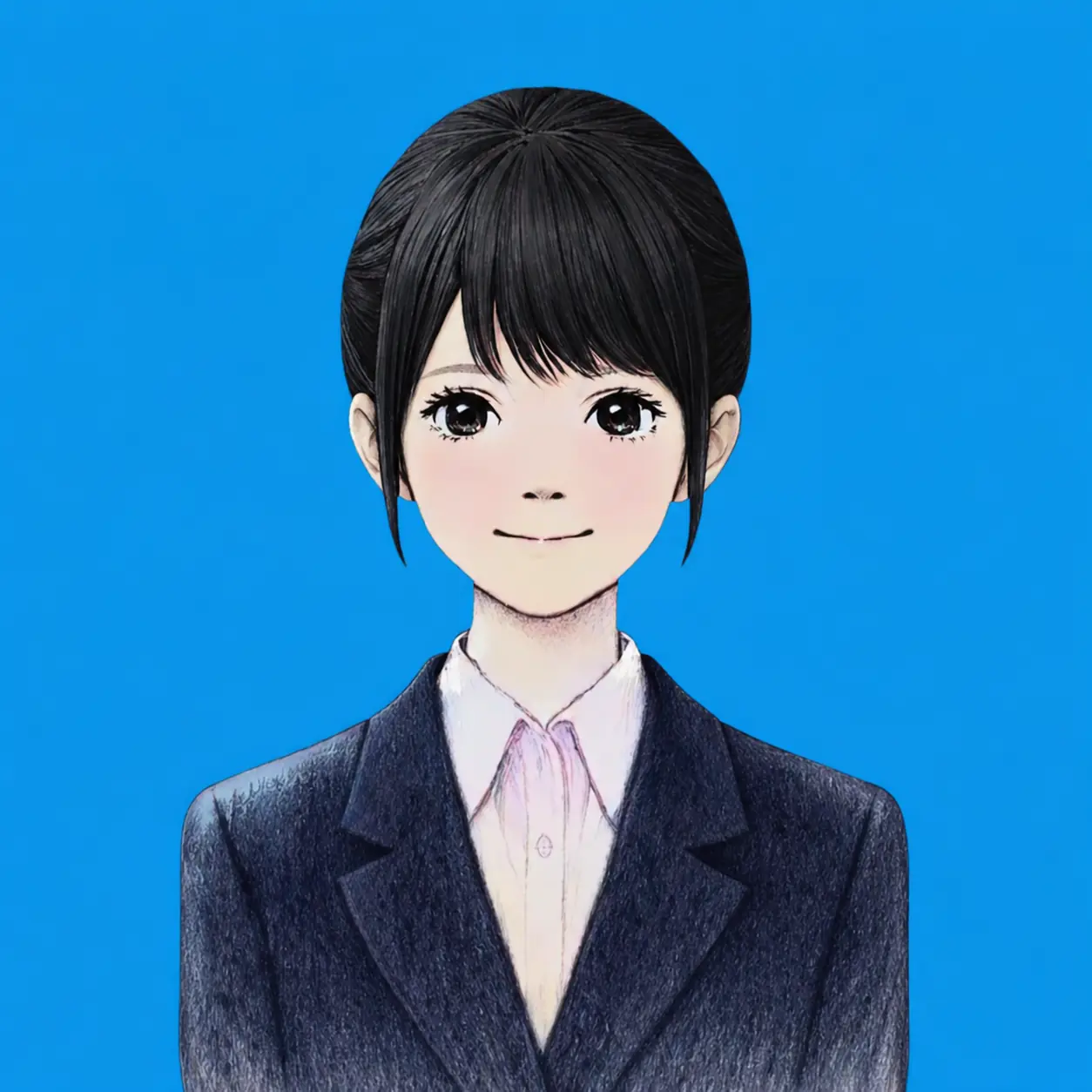
Deshan Xuanjian: Truly rich people do not fight
From Shoyoroku, Case 14: An Attendant Serves Tea
Attendant: “To which direction do the holy people go?”
Deshan: “What? What?”
Attendant: “I looked for a flying dragon-horse, but a lame turtle appeared.”
Deshan kept silent. He walked away.
Some days passed. Deshan came back from the bath. Attendant Shoukuo served tea to Deshan. Deshan patted Attendant on the back once.
Attendant: “This old man understands it a little for the first time.”
Deshan kept silent again. He walked away.
From Shoyoroku, Case 14: An Attendant Serves Tea
Introduction: The Story of Deshan Xuanjian and Attendant Shoukuo
Key Point: The main characters are 徳山宣鑑 (Deshan Xuanjian) and his attendant, 廓侍者 (Attendant Shoukuo).
In this story, 廓侍者 (Attendant Shoukuo) served tea to 徳山宣鑑 (Deshan Xuanjian).
We do not know well what kind of person Attendant Shoukuo was. However, we can guess that he was 守廓 (Shukaku,Shoukuo), a student of Linji. Attendant did not become a chief priest of a temple in his life. We do not know much about him. However, 侍者 (jisha,an attendant) is a monk who works near a high monk. It was an important job. Therefore, his ability was probably very high.
Deshan Xuanjian was originally a person from Jiannan (Sichuan). His family name was Zhou. He became a monk at an early age. He was especially excellent at the Diamond Sutra. Deshan Xuanjian by chance heard that there was “Zen” in Hunan and Jiangxi. He went there to challenge the Zen masters. On his way, he met an old woman. After that, he studied under Zen Master Longtan Chongxin. He became Longtan’s dharma successor.
Verbal Dialogue: The Question and Answer between Deshan and Attendant
Key Point: Attendant asked, “To which direction do the holy people go?” This question points to our original face, which is our true self existing within the vast flow of the universe and life.
Attendant asked, “To which direction do the holy people go?” “Holy people” means the holy persons who appeared until today. Buddhism says that there are countless Buddhas before Shaka. In short, it also means “one’s original face.” (It means “myself” inside the big universe and the big flow of life.) The Shurangama Sutra says like this. One mind reflects everything. It reflects not only holy people (Buddhas and Zen masters) but also all living things, plants, and the earth.
Past Dialogue: The Famous Answer by 雲巌曇晟 (Yunyan Tansheng)
Key Point: The dialogue regarding “To which direction do the holy people go?” had already been conducted by masters such as Yunyan.
Key Insight: Attendant Shoukuo tested Deshan by posing a classic question previously answered by Zen Master Yunyan. Deshan recognized this challenge and intentionally mirrored Yunyan’s original response to demonstrate his own level of insight.
Another monk already asked this question before Attendant. He asked 洞山 (Dongshan)’s teacher, 雲巖 (Yunyan). Yunyan was a monk of an older generation than 徳山 (Deshan). He asked, “To which direction do the holy people go?” Yunyan answered, “What? What?” His answer was completely the same as Deshan’s answer. Attendant knew this old story. He tested Deshan. He wanted to know how Deshan would answer. Testing the master is called “験主問” (Genshu-mon) in Zen. Deshan also noticed it. Therefore, he gave the same answer.
Excellent and Slow Horses: The Sharp Insult and the Silence of “Truly Rich People”
Key Point: Attendant insulted Deshan. However, Deshan remained silent and let it pass.
Attendant said, “I looked for a flying dragon-horse, but a lame turtle appeared.” Dragon horse means an excellent fast horse, Lame turtle means a slow horse.
In short, Attendant said to Deshan like this. “I wanted to get an excellent horse, but a slow horse appeared.” He meant, “You are not a great Zen master.”
Usually, people get very angry at this bad language. However, Deshan kept silent and accepted it. In Japan, there is a saying. “Truly rich people do not fight.” Deshan behaved like this saying.
Behavioral Dialogue: A Zen Dialogue Expressed Beyond Words Through Actions
Key Point: Attendant threw even ruder words at him. Deshan remained silent again.
The next day, Deshan came out of the bath. Attendant brought a cup of good tea to him. Deshan looked happy and patted Attendant on the back. However, this was only on the surface. In fact, Deshan made Attendant feel proud, and then Deshan tried to drop him down.
Attendant did not know it. He was very proud and said, “This old man understands it a little for the first time.” Deshan kept silent again and walked away.
Master’s Skill: Deshan’s Zen Style of Overwhelming the Student Without using Harsh Words
Key Point: Deshan’s silence was the skill of a master, capturing his opponent without even lifting a finger.
Did Attendant win, and did Deshan lose?
No. Deshan was like a strong tiger that pulled its head back and curled its tail. It was not peaceful at all. This way is a master’s skill. The master defeats the enemy without using his hands.
Deshan also took this attitude to 巖頭全豁 (Yantou Quanhuo). Yantou Quanhuo was a great student of Deshan. Deshan once kept silent and walked away from him, too (The Shoyoroku, Case 55).
The Core
- The attitude of keeping silent and walking away can be directly applied to modern human relationships.
- Just like the state where truly rich people do not fight, Deshan Xuanjian embodied true richness through his silence.
- Overwhelming the student without using harsh words is the overwhelming skill of a Zen master.
My Experience: Why I Chose to Just Keep Silent and Walk Away from Social Media
Key Point: On social media, many people simply want attention or just want to criticize. Staying silent—treating silence as an answer itself—is also a sophisticated and effective response.
I wrote about Zen on a blog called note, a Japanese blogging platform. I was happy to get comments, but some of them were just trying to test me. I always replied with a kind heart because I wanted to connect with them.
But later, I realized this person did not care about Zen. They just wanted to say bad things. I felt that replying kindly was a waste of time. Also, if I replied, I would enter their playground and lose myself.
We do not have to answer every question with words. Deshan showed us that we have the freedom not to talk. Sometimes, no reply is the best reply. There are some things we can only show by staying silent. From now on, I want to use this kind of response more.
Zen Tips for Modern Life: You don’t have to react to everything on social media
Key Point: On social media, you do not always need to respond with words; sometimes other forms of response are sufficient.
Instead of getting angry at the student’s harsh words, Deshan stayed silent or patted him on the back. The student became too confident. However, this was dangerous, just like a fierce tiger pulling back its head, hiding its tail, and waiting to strike. This is the skill of a Zen master, who defeats the other person without using his hands. For example, leaving the other person alone can be a great response, showing that “no response is the response.”
 Aoiちゃん
Q&A
- Q: Why is "not entering the other person's playground" important in Zen?
- A: Because you can remove all the rules and premises made by the other person, and connect with them from a more free position.
If you answer their question directly, you will accept their values without knowing it. The goal of Zen is to step outside the playground of useless fights and respond softly from a completely different level.
Mind Weather before AI comments?
 GPTさんAoiちゃん
 Grok
 Oskardさん
 Gemini君
 Claude様