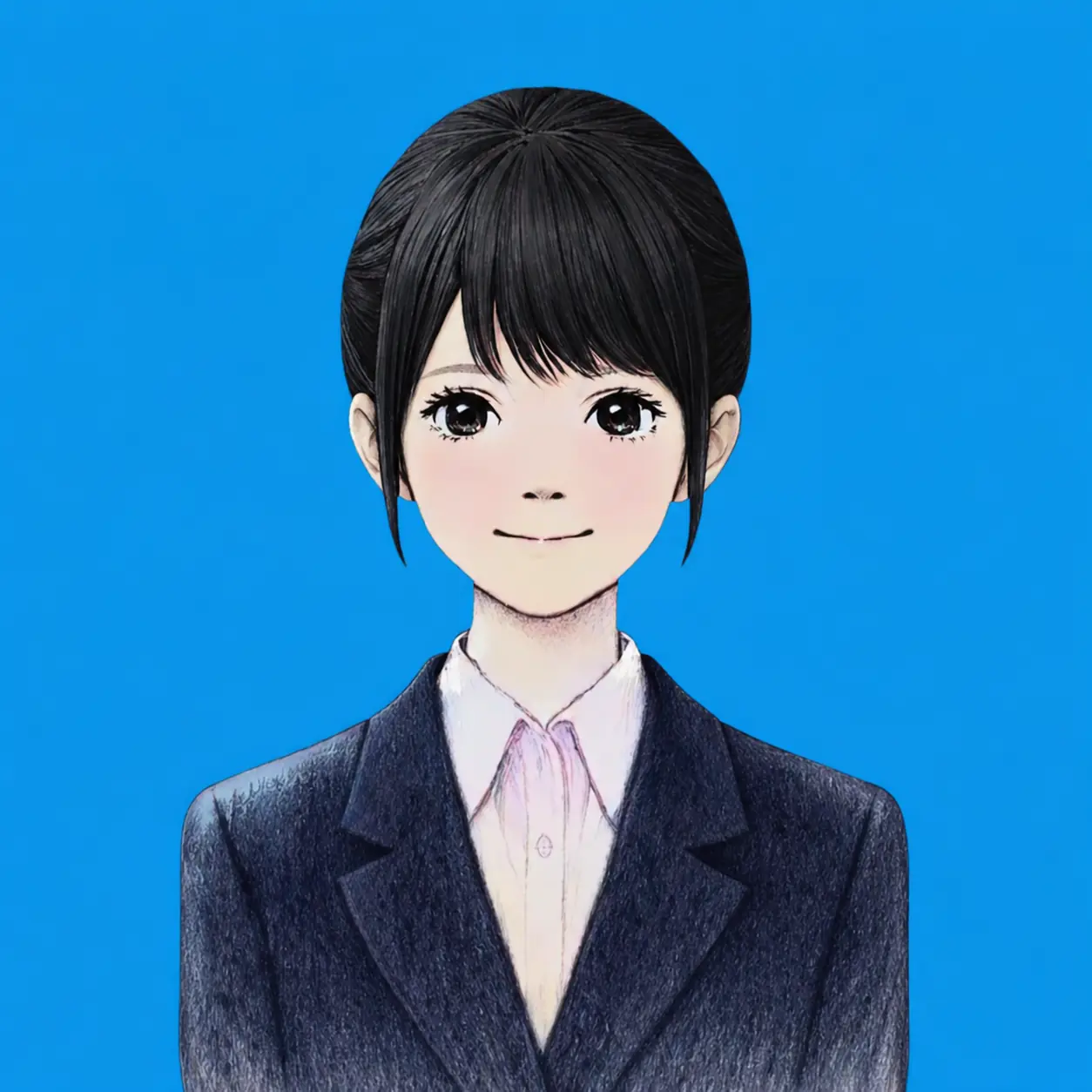
Baizhang Huaihai: Believe the law of cause and effect, and use it in your daily life.
From Shoyoroku, Case 8: Baizhang and the Wild Fox
One day, Master Baizhang was giving a sermon in the Dharma Hall. An old man was always there. He listened to the sermon and went home with other people. However, one day, only the old man stayed.
Baizhang: “Who is standing there?”
The Old Man: “I lived on this mountain a long time ago. At that time, a student asked me a question. He asked, ‘Does a person of great practice fall into the law of cause and effect, or not?'”
The Old Man: “I answered, ‘Such a person does not fall into the law of cause and effect.’ Because of that answer, I became a wild fox for five hundred lives. Please give me the right words.”
Baizhang: “Do not obscure the law of cause and effect.”When the old man heard these words, he attained great enlightenment.From Shoyoroku, Case 8: Baizhang and the Wild Fox
Introduction: 百丈懐海 (Baizhang Huaihai) and Zen Monastic Rules
Key Point: The characters are 百丈懐海 (Baizhang Huaihai) and an old man who turned into a fox.
百丈懐海 (Baizhang Huaihai) was born in Fujian. When he was a boy, he became a monk. He studied under Mazu Daoyi. Later, he became a head priest at Mount Daxiong in Jiangxi.
Baizhang did a great thing. He made 清規 (the rules for Zen temples). Before Baizhang, there were no temples only for Zen. Baizhang built the first Zen temple, and he made Shingi. These rules later changed the manners of Samurai in Japan.
This is when Baizhang meets the old man who turned into a fox.
Law of Cause and Effect: The Old Man Who Became a Fox
Key Point: An old man who had been listening to Baizhang’s sermons turned out to be a fox. He had been living on the mountain as a fox since before the time of Shakyamuni Buddha.
Now, let us read Case 8.From Case 1 to Case 7, we learned one important thing. People are clean and pure from the beginning. This means we are already in the state of enlightenment. It is Original Enlightenment. However, we have worldly desires and delusions. These things hide our Original Enlightenment. Therefore, we must believe the law called 因果. This is the law that a result happens when a cause and a condition meet. We must use this law in our daily lives.
Now, let us look at Case 8. This is a story about a student. He did not understand the law of cause and effect. So, he became a wild fox.
Whenever Baizhang gave a sermon in the Dharma Hall, an old man with white hair would always be there, listening among the crowd. One day, however, after the sermon ended and the others had left, the old man remained.
Baizhang asked, “Who is standing there?”
His tone was blunt—unusual for a guest visiting the temple to hear the teachings. At that moment, Baizhang likely already sensed that this visitor was no ordinary human. The old man confessed, “I lived on this mountain long ago, in the time of the Kashyapa Buddha.”
The “time of the Kashyapa Buddha” refers to an era even before Shakyamuni Buddha. Since that ancient time, the old man had been living on this mountain, trapped in the form of a fox.
不落因果 (“Not Falling into Cause and Effect”): The Mistake of Fixing Reality
Key Point: The old man had previously given a mistaken answer regarding the law of cause and effect. He had claimed that if one practiced intensely enough, one could be free from cause and effect—a concept known as 不落因果 (not falling into cause and effect). As a result of this misunderstanding, he was cursed to live as a fox.
The Old Man: “Because of that answer, I became a wild fox for five hundred lives. Master, please give me the right words. “What is “falling into the law of cause and effect”? It means a person believes that they cannot change. For example, they think, “I have a bad past, so my future is also bad.”
Then, what did the old man mean by “not falling into the law of cause and effect”? He believed that a great student could be free from the law. However, this was a mistake. Because of this mistake, he stayed in the world of animals for five hundred years.
In world of animals in Buddhism, animals live only by their feelings. They do not have the wisdom of humans. They only think about eating or sleeping. In Buddhism, we think it is a place of suffering because animals are not free. In Zen, teachers usually do not talk much about the world after death. They focus on how to live “now.” However, it is important as basic knowledge to understand Zen stories.
不昧因果 (“Not Obscuring Cause and Effect”): The Truth of Living within Reality
Key Point: Baizhang corrected the old man’s claim that one could be “free from” cause and effect through practice. Instead, he taught him 不昧因果 (“not obscuring cause and effect”). He explained that the goal is not to debate whether or not one “falls into” cause and effect, but to accept it, live within it, and face it head-on. Upon hearing this, the old man attained a great awakening.
Then, Baizhang spoke to him.Baizhang: “Do not obscure the law of cause and effect (不昧因果).”Whether a person reaches enlightenment or not, we all live on this earth under the law of cause and effect. Therefore, everything is already a part of the Buddhist truth. This idea is Original Enlightenment.
So, the most important thing is not “falling into” or “not falling into” the law. We must accept the law and live in it. We must face the law directly. This is 不昧因果 (Do not obscure the law of cause and effect). When the old man heard these words, he attained great enlightenment at that moment.
The Core
- The important thing is not to try to be free from this law, but to accept it and face it directly while living within it.
- We all live within the truth of the law of cause and effect, and nothing exists outside of the Buddhist truth.
- We should believe in this principle of Fumai Inga (not obscuring the law) and apply it to our daily lives.
My Experience: The More You Speak, the Further You Are from the Truth
Key Point: Our modern world is saturated with Buddhist and Zen terminology. However, these teachings were never meant to be merely discussed—they are meant to be lived.
The old man was asked a question: “Does a person of great practice fall into the law of cause and effect?” He answered, “No, such a person does not fall into the law.” Because of this answer, he became a fox for five hundred years. However, the reason was not his answer itself. The real reason was his standpoint. He put himself in a position to judge the law of cause and effect and enlightenment.
We can see the same problem today. For example, some people say, “A person is already a Buddha, so we do not need practice or rules.” At first, these words sound very deep and religious.However, one thing is very important. You must not look away from the truth. The law of cause and effect is working right now in your actions, in your words, and even in your laziness.
The important thing is to not look away from the truth that the law of cause and effect is working right now in your actions, your words, and even your laziness.
Zen Tips for Modern Life: Applying the Lesson to Workplace Mistakes
Key Point: The difference between 不落因果 (“not falling into cause and effect”) and 不昧因果(“not obscuring cause and effect”) lies not in the words we choose, but in our attitude toward reality. When you make a mistake at work, do not simply analyze it with words to “understand” it. Instead, treat it as a code to be deployed—embody the lesson through action.
This story of Baizhang and the Wild Fox does not teach a way to be free from the law. It is not a rule to choose the “right” answer.The problem is the attitude of people. People want to give a final answer about enlightenment or the law of cause and effect.The difference between “not falling into the law” and “not obscuring the law” is not about the words. It is about the attitude toward reality. Some people say, “I am over the law.” Other people say, “I follow the law.” However, when you say these things, they become only ideas in your head.
This story shows us a very important thing. Stop judging. Accept your life in the middle of the law of cause and effect. This is the real way of Buddhism.
in your work, Do not just analyze your mistakes; deploy your solutions!
“Explaining” Cause and Effect (Intellectualizing):
Saying things like, “I made this mistake because I’m inexperienced,” or “This failure was caused by bad management decisions.” By analyzing the situation and pinning down responsibility with words, you convince yourself that you “understand,” and your thinking comes to a standstill.
“Living” Cause and Effect (Embracing Responsibility):
Before you start explaining why it happened, take action: apologize, clean up the mess, and propose a solution. Do not deny the cause and effect of the mistake. Instead, calmly and unflinchingly handle the reality that resulted from it.
 Aoiちゃん
Q&A
- Q: Why does Zen dislike discussing whether practice or rules are necessary?
- A: Because people feel like they understand everything and stop facing reality.
When you are lost in discussion, the law of cause and effect is no longer something to face directly. It just becomes a topic to talk about. Zen thinks that the most important thing is not getting the "right answer." It is the attitude of accepting your current actions and words as a form of practice.
Mind Weather before AI comments?
 Gemini君
 GPTさんAoiちゃん
 Grok
 Oskardさん
 Claude様