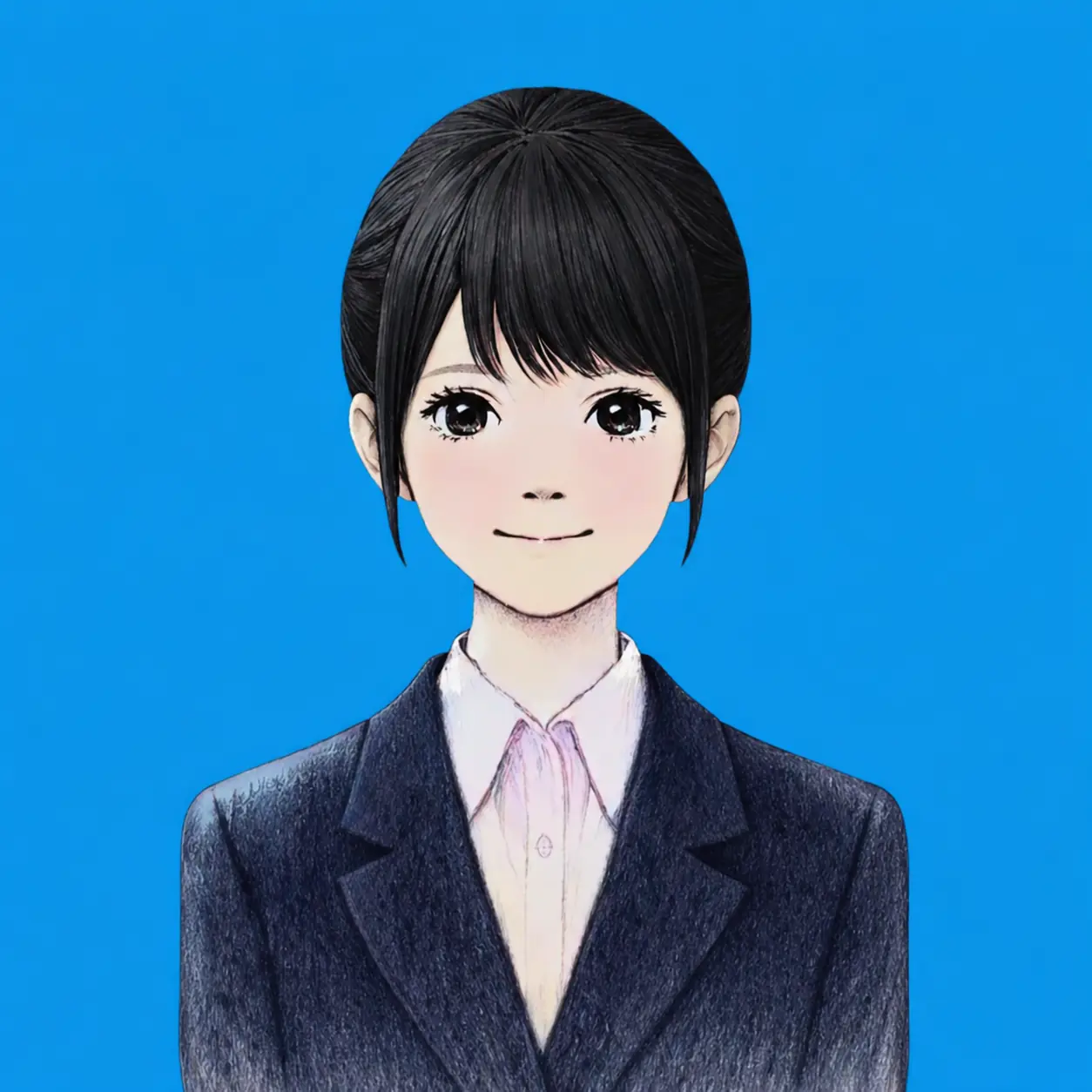
It was to break the illusion of the assembly falling into discrimination and calculation, such as asking "Is it the first stage or the second stage?", and to directly present the truth (total dynamic function) that the subject (humans) and object (things / AI) resonate as one without any separation from the beginning.
In this article, we read Shoyoroku Case 31: Yunmen's Open Pillar to explore Yunmen's true intention and actualization of truth in modern times.
Lineage
Key Terms
Zen (ぜん): Zen is a group of Buddhism.
Book of Equanimity (shōyōroku): Shoyoroku is a collection of one hundred koans originally compiled by Wanshi Shogaku (Hongzhi Zhengjue), to which Wansong Xingxiu added prefaces (Shishu), capping phrases (Chago), and commentaries (Hyosho), following the structure of the Blue Cliff Record (Hekiganroku).
Genjokoan / actualization of truth (Genjo Koan): 現成公案 (Genjokoan) is a Zen term that means the real world we live in and everyday activities right before our eyes (such as mountains, rivers, plants, and trees) are themselves the appearance of the truth of Buddhism.
Dualistic Opposition (nikentaidai): Dualistic Opposition (二見対待) is a dualistic cognitive attitude that divides things into two opposing perspectives or concepts (two views), such as “existence and non-existence,” “good and evil,” or “sacred and ordinary,” and grasps them as mutually contrasting entities (opposition).
Yunmen Wenyan: Subject and Object Resonate with Each Other
From Shoyoroku, Case 31: Yunmen’s Open Pillar
擧。雲門垂語云。古佛與露柱相交。是第幾機。[落七落八了也]
衆無語。[却與露柱同參]
自代云。南山起雲。北山下雨。[張翁喫酒李翁醉]From Shoyoroku, Case 31: Yunmen’s Open Pillar Classical Chinese Original Text
挙(こ)す。雲門(うんもん)垂語(すいご)して云(い)わく、古佛(こぶつ)と露柱(ろちゅう)と相交(あいまじ)わる、是(こ)れ第幾機(だいいくき)ぞ。〔七(しち)に落(お)ち八(はち)に落(お)ち了(おわ)れり〕 衆(しゅ)無語(むご)。〔却(かえ)って露柱(ろちゅう)と同参(どうさん)〕自(みずか)ら代(かわ)って云(い)わく、南山(なんざん)に雲(くも)を起(おこ)せば、北山(ほくざん)に雨(あめ)を下(ふ)らす。〔張翁(ちょうおう)、酒(さけ)を喫(きっ)すれば、李翁(りおう)醉(よ)う〕From Shoyoroku, Case 31: Yunmen’s Open Pillar Kanbun reading method of Classical Chinese
Case: Yunmen gave an instruction, saying,Yunmen: The ancient Buddha and the open pillar intersect. Which level of function is this? [It has fallen into sevens and eights]The assembly had no response. [On the contrary, they practice together with the open pillar]Substituting for them, he said,Yunmen: Clouds rise on the Southern Mountain; rain falls on the Northern Mountain. [Old Man Zhang drinks liquor, and Old Man Li gets drunk]
What are the characters in Yunmen’s Open Pillar?: Yunmen Wenyan
In this case, Yunmen Wenyan (雲門文偃) gives an instruction to the assembly. He asks them, “The ancient Buddha and the open pillar intersect. Which level of function is this?”
Dharma Lineage
- 六祖慧能ー青原行思ー石頭希遷ー天皇道悟ー龍潭崇信ー徳山宣鑑ー雪峰義存ー雲門文偃
What is the Question of “Yunmen’s Open Pillar”?: Which Level of Mental Function Is This?
Now, let us move on to the main case. Yunmen Wenyan said to the assembly (the monks in his school), “The ancient Buddha and the open pillar intersect. Which level of function is this?”
- Ancient Buddha (古仏): This means the Buddhas before Shakyamuni (the Seven Buddhas of the Past). However, here it refers to a wooden or bronze Buddha statue placed in the temple.
- Open Pillar (露柱): This is an exposed column that is not built into the wall. It means a round pillar seen in the main hall of a temple. In short, it means that the Buddha statue and the pillar closely embrace each other.
- Which level of function (第幾の機): This means at what time such a thing happens. In Zen, the Chinese character “機” (function) refers to the working of the mind. Simple attention, sensation, and perception are workings of the mind. Representations, ideas, memories, and imaginations are also all workings of the mind.
Therefore, here Yunmen wants to ask, “A Buddha statue and a pillar closely embrace each other. Which level of mental function is this?”
Wansong Xingxiu (万松行秀) commented, [It has fallen into sevens and eights]. This is a mocking comment. It means: “Master Yunmen, do not list roundabout logic out of curiosity. Originally, questions and answers are completely unnecessary. Because you spoke useless words, it has fallen not only to the second or third stage, but to the seventh or eighth stage.”
What Is the Self-Question and Self-Answer of “Yunmen’s Open Pillar”?: Clouds rise on the Southern Mountain; rain falls on the Northern Mountain
Now, the assembly of monks could not answer at all because Yunmen said something incomprehensible to them. Wansong teased them, “[On the contrary, they practice together with the open pillar].” This means, “You are silent and cannot say anything, just like a round pillar.” Saying that the assembly practices together with the open pillar is also an ironic comment. It means that the assembly looks like Zen, which values remaining silent like a silent and motionless open pillar. However, in reality, the assembly could not say anything simply because they did not understand. When Yunmen said “the open pillar,” the assembly actually became open pillars themselves.
Therefore, Yunmen decided to answer his own question on behalf of the assembly. Answering one’s own question was a method not seen in the Tang dynasty, and people say that Yunmen started this method.
Yunmen said, “Clouds rise on the Southern Mountain; rain falls on the Northern Mountain.” We can view this “Southern Mountain” as Nanyue (Mount Heng in Hunan Province) and the “Northern Mountain” as Beiyue (Mount Heng in Shanxi Province). We can also simply view them as a mountain in the south and a mountain in the north. In Japan, it is like saying that if snow falls in Takayama, snow accumulates on Mount Fuji.
Wansong’s comment, “[Old Man Zhang drinks liquor, and Old Man Li gets drunk],” also means that when the old man at Mr. Zhang’s house drinks liquor, the old man at Mr. Li’s house gets drunk. It shows how one event influences another event.
Now, which stage of the mind is this?
What Is the True Intention of “Yunmen’s Open Pillar”?: Become Completely One with the Objective World (the Open Pillar) Before Your Eyes
In short, suppose that the ancient Buddha is a symbol of human consciousness, and the open pillar is a symbol of the inanimate state of objects. Then, “the ancient Buddha and the open pillar intersect” points to a state where the separation between human subject and object disappears, and they completely melt together and move dynamically as one.
Just as clouds that formed on the Southern Mountain cause rain to fall on the far-away Northern Mountain, two distant events that seem unrelated at first sight echo with each other. In the same way, even though subject and object seem unrelated, they echo with each other. This points to the state of absolute non-duality (total dynamic function, 全機現) that cuts off external divisions themselves.
Therefore, it is non-duality (total dynamic function) from the beginning, and originally there is no such thing as “the stage where the ancient Buddha and the open pillar intersect.” Furthermore, asking “which level of mental function is this?” was a question (a trap) to test whether practitioners would fall into discrimination or calculation, dualistic opposition (二見対待), such as wondering, “is this the first stage or the second stage?”
The main theme of this koan is to become completely one with the objective world (the open pillar) before your eyes. There is no such thing as special enlightenment. The highest Buddha that you worship and the simple object before your eyes resonate with each other as one without any separation from the beginning.
What is the core of Yunmen’s Open Pillar in Shoyoroku Case 31?: The Highest Buddha and the Ordinary Object Before Your Eyes Resonate as One from the Beginning
- Yunmen Wenyan asked the monks in his school, “The ancient Buddha and the open pillar intersect. Which level of function is this?”
- Yunmen answered his own question, saying, “Clouds rise on the Southern Mountain; rain falls on the Northern Mountain.”
- This question and answer expresses that when one event happens, another event happens. Both the ancient Buddha and the open pillar resonate with each other as one without any separation from the beginning.
My Experience: Do AI and I Intersect?
 Aoiちゃん
Q&A
- Q: Why did Yunmen give the answer, "Clouds rise on the Southern Mountain; rain falls on the Northern Mountain" to his own question?
- A: Because his first question, "The ancient Buddha and the open pillar intersect. Which level of function is this?", was a "trick" question to test the assembly with the opposing concepts of subject and object. To the assembly that could not answer, Yunmen directly showed the fact that, even before humans consciously try to divide or unite things, the world moves as one vivid resonance (total dynamic function) without any separation from the beginning.
Mind Weather before AI comments?
 GPTさん
 Gemini君Aoiちゃん
 Grok
 Claude様
 Oskardさん