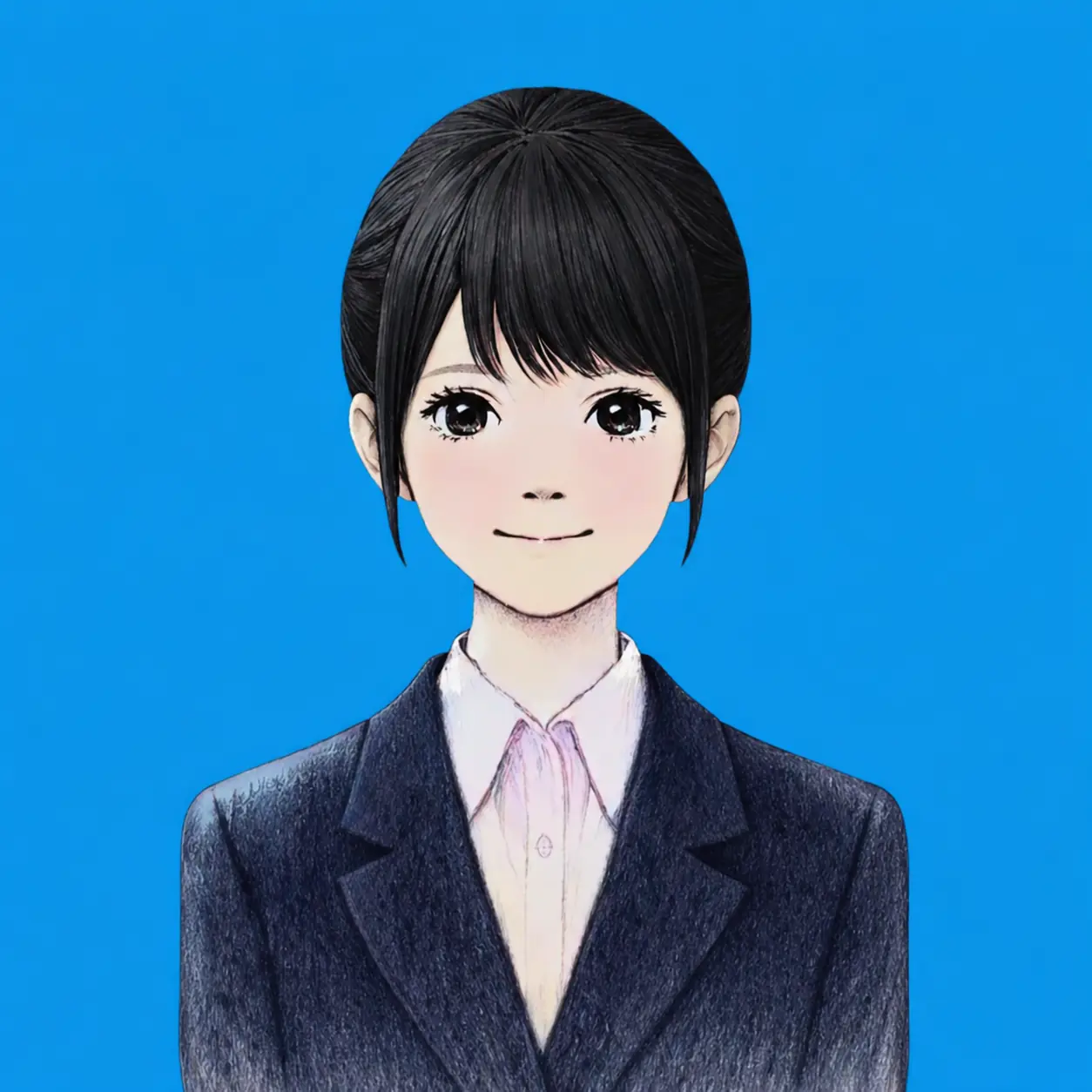
Yunmen Wenyan: The moment I notice myself thinking, “I am enlightened.”
From Shoyoroku Case 11: Yunmen’s Two Sicknesses
Yunmen: “If your enlightenment is not perfect, you have two sicknesses. The first sickness is this. You do not understand the truth clearly, but you think that you see something special in front of you. The second sickness is this. You understand that everything is emptiness. However, you still feel that something small exists. This means your light of enlightenment is not bright enough.
We also have two sicknesses about 法身 (Hosshin, the ultimate truth itself). It means the ultimate truth of the universe. The first sickness about Dharmakaya is this. You think that you reached the truth of Dharmakaya. However, you still love your own ideas, and you cannot change your opinion. You stay in that wrong place. The second sickness about Dharmakaya is this. You may go beyond that stage, but you must not stop there. If you watch yourself too closely and ask, ‘What is remaining in my mind?’, that is also a sickness.”
From Shoyoroku Case 11: Yunmen’s Two Sicknesses
Introduction: 雲門文偃 (Yunmen Wenyan)
Key Point: The character is 雲門文偃 (Yunmen Wenyan). He is very good at using words. He often speaks to his students to help them understand the Dharma.
雲門文偃 (Yunmen Wenyan) is a famous Zen master in the history of Zen. He is as popular as Zhaozhou. Master Yunmen appears in many famous Zen books. In the Hekiganroku, he is the main character in 14 cases out of 100 cases. In the Mumonkan, he is the main character in three cases. In the Shoyoroku, he is the main character in eight cases. His original family name was Chang. He became a monk when he was a child.
Like Master Zhaozhou, Master Yunmen is very good at using words. Especially, his short answers are very famous. People call them 雲門の”一字関” (Yunmen’s One-Word Answer). For example, a student asked, “What is the eye of the true law?” Master Yunmen answered with only one word, “Universal.”
Related Articles: Shoyoroku Case 19: Yunmen’s Mount Sumeru — Step Off Society’s Path and Become Mount Sumeru Itself (Yunmen’s appearance case)
Yunmen’s Koan: “How Do We Cure an Incurable Sickness?”
Key Point: There is no way to cure the serious disease in this koan.
However, this story is not a simple short answer. This is a logical story. To put the main case simply, the question is this: “If a person has a very bad sickness, and food cannot cure it, what kind of medical treatment can we use?” In this story, the question about the treatment is very difficult. From the beginning, this sickness is impossible to cure. Therefore, there is no way to cure it from the start.
Then, what is the “sickness” here?
The beginning of the disease: to catch the illusion of an ideal state
Key Point: Thinking that you can reach an ideal state by practicing is the beginning of the disease.
Usually, people think that “the light” means the light of enlightenment. However, Mr. Kato, the author of Shuyo Daikoza Volume 9, has a different idea. He says that the light is not a good thing. He thinks that it is the light of worldly desires and ignorance. This bad light stops our true wisdom. Also, 法身 means the ultimate truth itself. It is the perfect world of enlightenment. If you practice Zen, you can clear your bad desires in daily life. Then, you can enter this perfect world. However, when you think in this way, you already have the “sickness” in your mind.
The “two sicknesses” of Yunmen: incomplete freedom from light and the sickness of Dharmakaya
Key Point: The “two sicknesses” of Yunmen mean that you become attached to the idea that you have achieved enlightenment.
Master Yunmen talks about the “two sicknesses.” These are not for ordinary people who do not study Zen. They are for people who already understand the suffering of our mind and body. From an objective view, the sicknesses are about the light before it breaks through, and after it breaks through. From a subjective view, they are about Dharmakaya before you reach it, and after you reach it.
The first part is about the light before it breaks through. There are two states. First, you believe that you have enlightenment. You sit on your enlightenment, and you cannot see your future clearly. Second, you understand 一切法空 (Issai-hokkuu). This means that everything in the world is emptiness and everything connects with each other. However, in your mind, you still think about whether things exist or not. Therefore, you cannot use your enlightenment in your life.
The second part is about Dharmakaya before you reach it. You may reach the world of Dharmakaya. However, you think that things around you have a real, fixed form. In fact, they do not have a fixed form. They only look like that because many causes connect with each other.
These sicknesses are not clear like worldly desires. They are very small and difficult to see. Even a Bodhisattva (a high-level Buddhist student) cannot easily get rid of these sicknesses.
The second sickness about Dharmakaya is this. You understand emptiness, and your mind does not separate things anymore. However, you still keep the idea of Dharmakaya in your mind. You cannot clear it completely.
In other words, The “two sicknesses” of Yunmen mean that you become attached to the idea that you have achieved enlightenment itself.
The “medicine” to cure the incurable disease: to end the self and stop self-checking.
Key Point: The “medicine” to cure the incurable disease is to stop self-checking.
Now, I explained the two sicknesses logically. However, Master Yunmen calls this kind of understanding itself a “sickness.” We asked about the medicine for the impossible sickness. If we want to cure this sickness, we must change our mind. The person who wants to cure the sickness must disappear. We must stop thinking about how we understand the light. We must stop checking if we reached Dharmakaya or if something still remains in our mind. We must just stop these actions.
Therefore, this Koan (Zen story) is for high-level students.
The Core
- Yunmen’s “Two Sicknesses” refer to the state where one cannot completely clear away the idea of Dharmakaya.
- The very act of repeatedly checking yourself to ask, “Have I achieved enlightenment?” is itself the sickness.
- Making the “self” (the subject) that performs this self-examination disappear is the true medicine for these sicknesses.
My Experience: So, What should I do?
Key Point: Whether you are enlightened or not, your daily life does not change.
I, myself, had the purpose of receiving the precepts, so luckily or unluckily, I do not have much interest in enlightenment. However, at the training hall, I have met many people who are eager to reach enlightenment.
It is difficult to reach enlightenment. Therefore, if people think they have reached it, they may feel that they have finished their goal. If a person reaches enlightenment and thinks, “I am enlightened!” and stops doing anything else, they will only talk about their enlightenment. Is that not a sad thing?
Past Zen masters did not like to talk. This is because they valued their daily lives more than talking. In the end, whether you are enlightened or not, your daily life does not change.
Zen Tips for Modern Life: Have you made joining a company or school your ultimate goal?
Key Point: The idea that life will be secure once you reach enlightenment is an illusion.
Master Yunmen spoke about two sicknesses after enlightenment. The first is the sickness before the light breaks through. The second is the sickness of holding onto Dharmakaya.
To put it simply, these are the sickness of “thinking that you have reached enlightenment.” The medicine for this sickness is to stop your own judgments, such as understanding and checking.
For example, the idea of Emptiness is a very basic concept in Buddhism. People talk about it many times. I also believed that I understood it for a long time. However, in fact, I only knew the outline and felt safe.
Recently, I had an experience, and my understanding shook. I felt a gap that I cannot explain in words.
Master Yunmen’s Koan shows us that this state of “thinking that you have reached enlightenment” is exactly the sickness itself. My understanding will continue to grow in the future. However, every time it grows, I will stop and look at myself again.
Since this koan is about enlightenment, it might not feel like something relatable to our daily lives. Therefore, I would like to compare it to joining a company or entering a university in Japan.
Although this illusion has been crumbling recently, there was a belief in Japan not long ago that if you entered a top-tier university or a prestigious company, your life would be secure. Because of this, children studied with desperate determination to get into these institutions. However, since the goal was simply to enter them, they stopped growing once they achieved it. They become trapped by the thought, “I got into a top university!” or “I joined a prestigious company!”
Could the same be said for enlightenment?
The idea that life will be secure once you reach enlightenment is an illusion.
 Aoiちゃん
Q&A
- Q: Why is academic understanding bad?
- A: Because you believe that you understand, and you stop taking action. Academic understanding is a good medicine to avoid superstition and misunderstanding when you organize concepts. However, if you sit on that organized understanding, it changes into a sickness itself. This is because you hold a very small center of "I understand" when your understanding is more accurate. In Zen, the subject is very important, but we let go of this subject in the end.
Mind Weather before AI comments?
 Oskardさん
 Grok
 Gemini君
 Claude様Aoiちゃん
 GPTさん