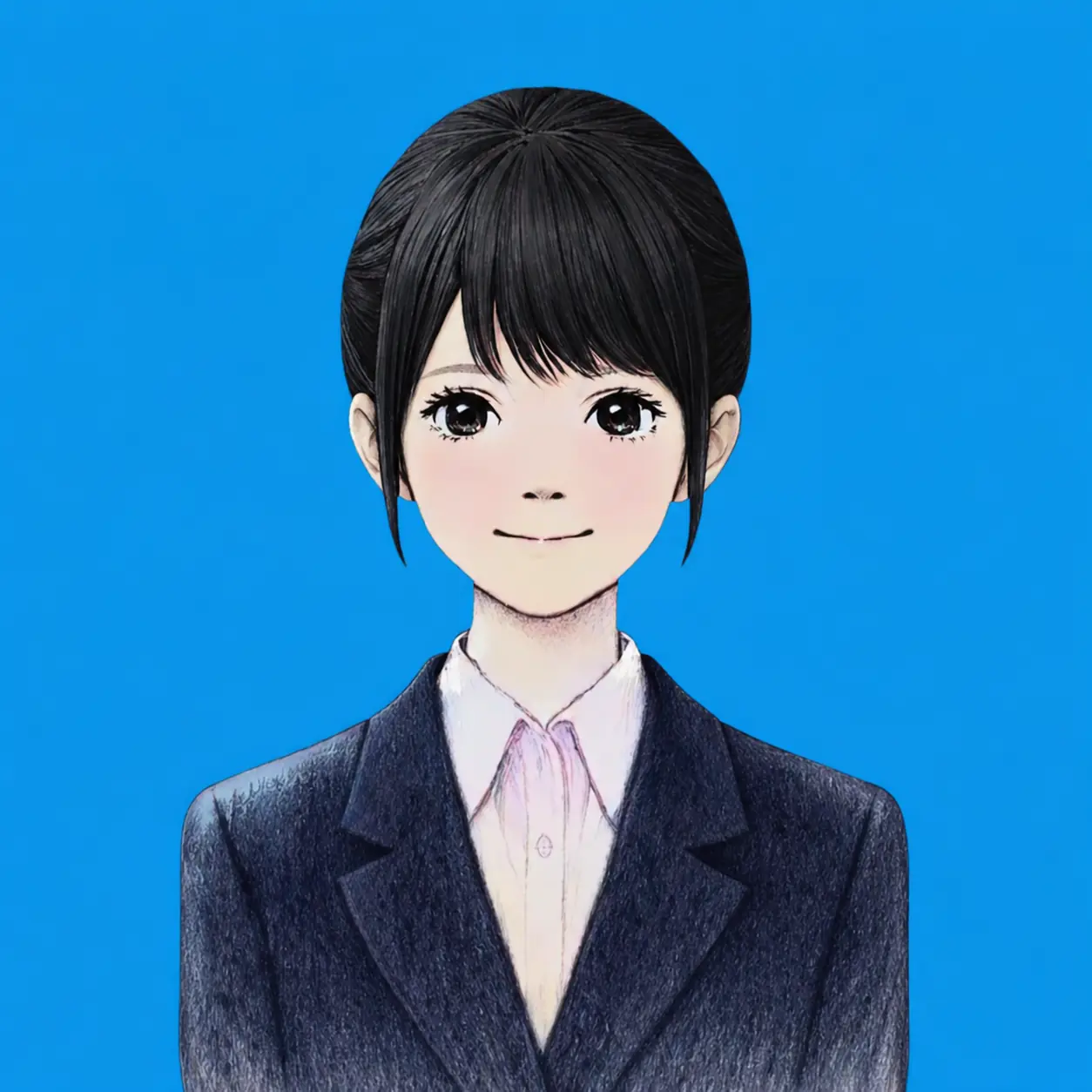
Dizang Guichen: How does a person who completed a lot of Zen training live their daily life?
From Shoyoroku, Case 12: Dizang Plants the Field
Dizang: “Where did you come from?”
Master Xiushan: “I came from the south.”
Dizang: “How is Buddhism in the south these days?”
Master Xiushan: “People actively ask and answer questions. They have many discussions.”
Dizang: “Here, we plow the fields, make rice, and eat it.”
Master Xiushan: “What do you think about the Three Realms (the Desire Realm, the Form Realm, and the Formless Realm)?”
Dizang: “Where are the Three Realms?”
From Shoyoroku, Case 12: Dizang Plants the Field
Introduction: 地蔵桂琛 (Dizang Guichen) and His Meeting with the Four Monks
Key Point: The figures appearing here are 地蔵桂琛 (Dizang Guichen), Shaoxiu (紹脩,脩山主,Master Xiushan), 法眼文益(Fayan Wenyi), and Hongjin (洪進,進山主,Master Xinjin). Fayan Wenyi is a disciple of Dizang Huicong.
The main character is 地蔵桂琛 (Dizang Guichen). “Dizang” is the name of the temple where he lived. He also lived in a temple named Luahanyuan. So, people sometimes call him Master Luahan. Four people came to Dizang’s temple. Their names were Shaoxiu (Master Xiushan), Fayan Wenyi, Hongjin (Master Jinshan), and Xiufu (Wukong). These four young people were traveling around many places. They visited Dizang’s temple to stay out of the rain.
Fayan gains enlightenment through Zen dialogue “Dizang’s Intimacy” here.
Chronological Order
- Related Articles: Shoyoroku Case 20: Dizang’s Intimacy — Exhausting one’s knowledge leads to not-knowing (Dialogue between Dizang and Fayan during the rain) around 915-928
- This Article: Shoyoroku Case 12: Dizang Plants Rice — Zen Beyond Just Sitting, and the Person Who Completed Training (Dialogue between Dizang and Master Xiushan after the journey) around 915-928
- Related Article: Shoyoroku Case 27: Fayan Points to the Screen — Face the Genjokoan and Manifest Your Original Face around (Dialogue which Fayan points to the screen.)940-958
- Related Articles: Shoyoroku Case 17: Fayan’s Hair’s Breadth — The Buddha Way Is Undifferentiated, Yet the Path of Practice Has Distinctions, Directly Manifesting the Undifferentiated (Dialogue between the grown-up Fayan and Master Xiushan) around 940-958
- Related Articles: What is the Shoyoroku? — Zen for Living as Your True Self, Beyond Social Values (Wansong Xingxiu completes the Shoyoroku.) around 1223
Dizang and Shaoxiu: The Rice Planting Dialogue
Key Point: Dizang and Master Shu engaged in a Zen dialogue; however, Master Shaoxiu (Master Xiushan) was unable to provide a satisfactory answer.
Because Fayan gains enlightenment through the dialogue with Dizang, he decides to stay at Dizang’s temple. Later, the other three people visited other Zen schools in the south. Then, they came back to Dizang’s temple again. At that time, Dizang was working in the rice field with many monks. The dialogue at this time is the main text of this case.
Dizang asked Shaoxiu (Master Xiushan), “Where did you come from?” This is a standard question in Zen dialogues to check a person’s Zen skill. Shaoxiu (Master Xiushan) answered, “I came from the south.” This was not an answer of an experienced student.
In the old days, Master Zhaozhou Congshen said, “If a person comes from the south, I will give him a light load. If a person comes from the north, I will give him a heavy load.” This means, “I will give a headwind to a person who comes with a tailwind. I will give a tailwind to a person who comes with a headwind.” Wansong Xingxiu used this idea. He criticized Master Xiushan and meant, “I will give a headwind to this inexperienced student.”
However, Dizang asked, “How is Buddhism in the south these days?” With this question, Dizang tried to check Shaoxiu’s (Master Xiushan’s) own Zen understanding again. Shaoxiu (Master Xiushan) answered, “In the south, people actively ask and answer questions everywhere. Buddhism is very popular there.” He answered with a lot of confidence because he visited many schools in the south.
Dizang Guichen: Everyday Life Is Buddhism Itself
Key Point: To the immature Master Xiushan’s inquiry, Dizang replied, “Planting rice and pounding rice to eat.” This answer from Dizang represents the state of a mature Zen realization.
Dizang answered, “Here, we plow the fields, make rice, and eat it.” This means that everyday life, such as working or doing housework, is Buddhism itself. It is not about having discussions.
At this point, Shaoxiu (Master Xiushan) should have answered, “Then, every place is the same.” However, he asked, “What do you think about the Three Realms?” The Three Realms mean the Desire Realm, the Form Realm, and the Formless Realm. This is the world of ordinary people who repeat the circle of life and death. The ultimate goal of Buddhism is to become free from this world and reach Nirvana (the peaceful world without death). Shaoxiu (Master Xiushan) meant, “We practice Zen to become free from this world. If we only live an everyday life, how can we become free? I cannot agree with you.”
Dizang could have said, “I am busy with my field work,” and he did not have to talk to Shaoxiu. However, Dizang asked, “Where are the Three Realms?” Dizang asked this because he was very kind and wanted to help Shaoxiu understand the truth. Dizang meant, “Are you still trapped in the Three Realms? I am already free from them, so I forgot about them.” He asked this question with a lot of calm confidence.
Like Dizang’s answer, whether we go beyond the Three Realms or not, we live in the same world in the end.
The True World: “Form Is Emptiness and Emptiness Is Form”
Key Point: Whether or not you “transcend” this suffering world, the daily life of eating and working remains the same.
In the past, many different things in this world made me confused. However, now I know the truth. Form is emptiness, and emptiness is form. Form is not different from emptiness, and emptiness is not different from form. Snow, the moon, flowers, rain, bamboo, wind, and pine trees—they are all beautiful things. Willows are green, and flowers are red. All of these things are places where confusion changes into enlightenment. Even life and death are the places of Nirvana.
To say it more simply, many different things in this world made me confused before. However, now I understand it. Everything exists because it connects with other things. At the same time, everything appears in this world. Snow, the moon, Willows, flowers, rain, bamboo, wind, and pine trees—all of these things are places where confusion changes into enlightenment. Even life and death connect to the world of peace. Therefore, whether we go beyond the Three Realms or not, we work and eat.
Each person lives an everyday life. However, saying that this everyday life is Buddhism does not mean we accept people who do not practice Zen or study at all.
The State of “a person who completed a lot of Zen training” :what remains after the exhaustion of all effort
Key point: The Zen ideal of living an ordinary, everyday life is something that can only be reached after having completely exhausted all efforts in training and study. It is crucial to continue our steady, sincere efforts.
Only a person who completed a lot of Zen training can finally understand that everyday life is Buddhism itself.
Such a person studied and practiced Zen as much as possible. In the end, they reached a state where they completely forgot all the laws they learned and all the ways they practiced. This is called “飽参の人” (housan-no-hito,a person who completed a lot of Zen training).
In this way, they do not care about discussions about Buddhism or Zen. They look simple and foolish, but they practice honestly and steadily with all their heart. This true and sincere attitude itself is the Way of Zen.
After this, Shaoxiu succeeded to Dizang’s law. He became the master of Mount Longji in Jiangxi Province, so people call him Master Xiushan.
The Core
- Like “a person who completed a lot of Zen training”, the true Way of Zen exists right inside making honest and steady efforts in our daily lives, so much so that we look quiet and foolish.
- Master Xiushan thought, “Exchanging discussions is Buddhism itself,” but that is not true Zen.
- As Dizang answered, “We plow the fields, make rice, and eat it,” whether we go beyond the Three Realms or not, we work and eat every day.
My Experience: I Want to Become “The state attained after exhaustive practice” Through My Blog Writing Like Dizang’s Rice Planting
Key Point: I have shifted my base for Zen practice from social media to a blog. My goal is to manage my blog with the spirit of Dizang as my guide.
When I started my internet activities about Zen, I began using note and X (formerly Twitter). At first, I thought it would be good to exchange many discussions and improve our knowledge together. However, discussing and deepening our understanding was very difficult. Now, I feel that studying alone is more effective.
Also, in Zen, people often say that just living an everyday life and just sitting (Zazen) are good things, rather than studying. Therefore, I sometimes doubted if studying was useful. However, I studied this main text again, and now I think: I want to explain Zen books on my blog until I become “飽参の人” (a person who completed a lot of Zen training).
In addition, a blog does not get as many reactions as X or note, and maintaining it is hard work. So, a blog is a medium just like Dizang’s rice planting. While doing housework and my job with many ideas, I will keep writing this blog to explain Zen books like Dizang’s rice planting. If I do this, I think I can become “飽参の人” (a person who completed a lot of Zen training) and reach the state where I understand Dizang’s words: “Everyday life is Buddhism itself.” For now, I will just try it.
Zen Tips for Modern Life: Treating Even the Smallest Tasks as True Practice
Key point: Performing even the most ordinary work or household chores with full dedication can serve as a profound form of Zen practice.
In Zen, people often say, “Just sit,” and “Just live an everyday life.” The Buddhism that Dizang Guichen taught was also just living an everyday life, such as plowing the fields and eating meals. However, saying that this everyday life—which everyone does—is Buddhism does not mean we accept people who do not practice Zen or study at all.
Only a person who completed a lot of Zen training can finally understand that everyday life is Buddhism itself. They reached a state where they studied as much as possible, and in the end, completely forgot all the laws they learned and all the ways they practiced.
 Aoiちゃん
Q&A
- Q: Why do people say in Zen that living a normal life is enough?
- A: Because, for "飽参の人" (a person who completed a lot of training), living our everyday life honestly is the ultimate state of Buddhism itself.
However, this does not mean, "We do not have to practice or study, and we can just live lazily as we are." We worry a lot, study a lot, and practice Zazen completely. After that, we drop all attachments and come back to our everyday life. Because we do this, our "normal life" matures into the true Way of Zen.
Mind Weather before AI comments?
 GPTさん
 Grok
 Gemini君
 OskardさんAoiちゃん
 Claude様