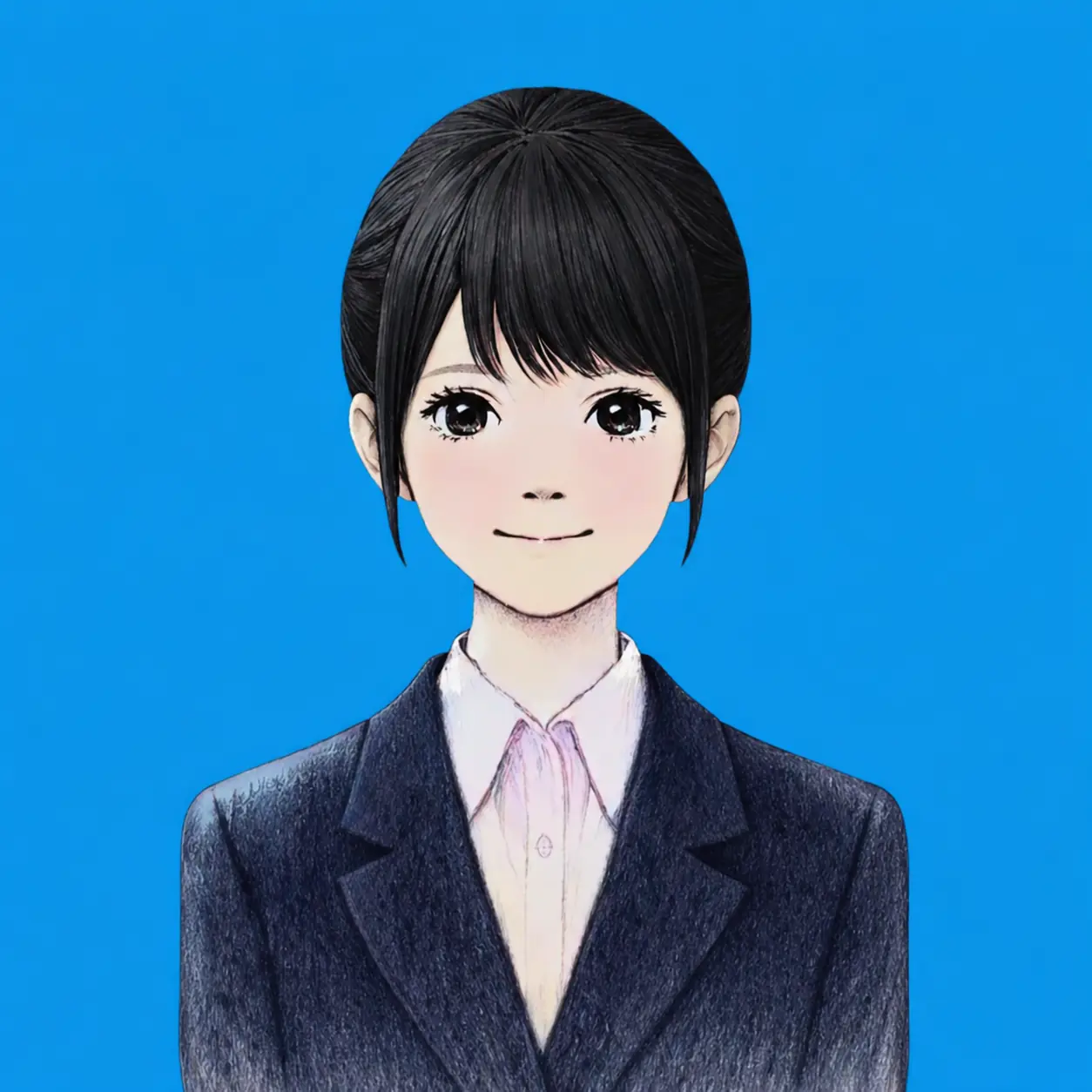
Bodhidharma: True Merit Lies Beyond the World
From Shoyoroku, Case 2: Bodhidharma’s Vast Emptiness
Emperor Wu: “What is the first principle of the holy truth?”
Bodhidharma: “To speak plainly, there is nothing holy.”
Emperor Wu: “Then, who is the person answering me?”
Bodhidharma: “I do not know.”Emperor Wu could not understand.
So Bodhidharma left the court. He crossed the Yangtze River and went to Shaolin Temple. He practiced Zazen toward a wall for nine years.From The Shoyoroku, Case 2: Bodhidharma’s Vast Emptiness
Introduction: Bodhidharma and Emperor Wu of Liang
Key point: The main characters are 菩提達磨 (Bodhidharma) and Emperor Wu of Liang. The Emperor was a devoted Buddhist who built temples and performed various ceremonies. Bodhidharma traveled to China and met him.
This story has two main characters, 菩提達磨 (Bodhidharma) and Emperor Wu of the Liang Dynasty. In Chinese history, the land was divided at the Yangtze River. The south was Song, and the north was Wei. Later, the Song Dynasty was destroyed by the Qi Dynasty. Then, Xiao Yan started the Liang Dynasty. He was a member of the emperor’s family. Emperor Wu in this story is this Xiao Yan. At first, Emperor Wu was a serious follower of Taoism. However, he started to think that its teaching was limited and shallow. So he changed his religion to Buddhism. He built many temples and held many formal ceremonies.
Bodhidharma is the main character of this case. It is said that he was the third prince of the Koshi Kingdom in South India. When Bodhidharma was a child, he became a priest under Hannyatara. He was the 28th successor of Buddhism from Shakyamuni. Bodhidharma practiced under Hannyatara and reached enlightenment. He worked in South India for some time, but eventually he decided to go to China. In China, Bodhidharma met Emperor Wu in the capital, Kinryo. This meeting became the origin of this old story.
Worldly Dialogue: What is the Merit of Building Temples and Performing Ceremonies?
Key point: Emperor Wu was shocked when Bodhidharma told him that there was no merit in building temples or performing religious ceremonies.
Now, let’s look at the main story. According to the Dentoroku, there were some other questions and answers before this part.
Emperor Wu: “Since I became the Emperor, I have built many temples.
I have read sutras (Buddhist scriptures). I have made many monks and let them work for the country. What kind of merit is there?”
Bodhidharma: “There is no merit.”
Emperor Wu: “Why do you say there is no merit?”
Bodhidharma: “Small rewards in this world come from human desires. They are like shadows of the body.They look real, but they are not true.”
Emperor Wu: “Then, what is true merit?”
Bodhidharma: “It is the wisdom that appears clearly. Its nature is natural and empty. You cannot get this kind of merit in the material and social world.”
Emperor Wu believed that building temples and reading the scriptures were the best things to do. So, he worked hard for Buddhism with all the people of his country. However, he did not understand the true spirit of Buddhism at all. That is why he asked about the merit of his work. He was very surprised when Bodhidharma said, “There is no merit.”
Beyond-the-World Dialogue: What Is True Merit?
Key point: Building temples and performing rituals are merely worldly deeds. To get true merit, we must go out of the social and material world.
Building temples and reading the scriptures are teachings for the social and material world. They have some merit, but they are like pouring water into a broken bucket. For example, in temples, people chant the Heart Sutra and walk around the building. While they are doing this, they do not think about extra things. I also chant the Heart Sutra when I want to clear my mind. However, to get true merit, we must go out of the social and material world.
What is true merit? It exists beyond human desires for rewards or effects. It exists after you understand the true face of the universe. Bodhidharma said that people in the social and material world cannot get it.
The Core of Zen: What is the “The First Principle Of The Holy Truth”?
Key point: Truth exists in the non-dualistic realization that all is one, which is known as the “The First Principle Of The Holy Truth”. However, Bodhidharma countered this by saying, “There is nothing holy.”
Now, let’s go back to the main story. Emperor Wu asked, “What is the first principle of the holy truth?” Here, “Holy” means a great teacher, and “Truth” means a word that has no lies. This phrase means the ultimate goal of Buddhism.
For example, imagine waves on the great sea. These waves are only phenomena. They have no real substance. We call this “empty.” We must not be caught by these waves. To see things in this way is called 真諦 (Shintai). However, waves exist as phenomena. To see things in this way is called 俗諦 (Zokutai).
If we lean toward only one side, we lose the truth. We should not divide “substance and phenomena” or “nothing and being.” Truth exists when we see these two things as one. This is called 聖諦第一義 (shotai-daiichigi,the first principle of the holy truth).
Emperor Wu read many Buddhist books, so he knew this phrase very well. However, Bodhidharma simply answered, “To speak plainly, there is nothing holy.”
Beyond Words: The Earth Rotated Before We Were Born
Key point: The Earth has been spinning around the Sun since long before anyone started talking about “enlightenment.” Distinctions like “truth or illusion,” or “being or not-being,” are simply things we made up. They weren’t there in the beginning, and they aren’t part of the way the world really is.
Bodhidharma meant that we should throw away all complicated thoughts, such as Shintai or Zokutai, and being or nothing. He expressed a state of mind that is as clear as a beautiful sunny day.
To say more, there is no Buddha and no Law. Why? Because the earth has been moving around the sun since long before Shakyamuni appeared, and since long before anyone reached enlightenment.
Still, Emperor Wu could not agree. He asked, “Then, who is the person answering me?” He meant, “You say there are no holy people. But are you not a holy person who knows the ultimate truth of Zen?” Emperor Wu only looked at the man, Bodhidharma. He did not see the existence of Bodhidharma as a result of the work of the universe. He was caught by words and did not try to see anything else. So Bodhidharma said, “I do not know.” This does not mean that he knew nothing. It means that he could not explain it with words.
Emperor Wu could not understand this.
So Bodhidharma left the palace. He crossed the Yangtze River and went to Shaolin Temple. He sat facing a wall and practiced Zazen for nine years.
The Core
Enlightenment lies beyond the social world, after abandoning all desires for merits or effects.
Discard all illusions created by words, and simply face the ultimate truth of the universe.
Do not seek anything outside yourself; only your inner awakening can pave the way.
My Experience: A True Religious Leader Should Never Seek the Spotlight
Key point: This story shows us that real faith isn’t about building big temples or reading books. It’s a chance for all of us to rethink how we connect with religion. If a religious leader is always trying to be the center of attention, it’s best to be a little careful.
The stories I share may seem difficult for you. That is natural. Zen books were written for people who went out of the social world. However, I am surprised and happy that there are people who read my articles.
This story makes us think about one question: “What is religion?” Building temples or reading scriptures is not everything. This story is a good chance for us to think about how to live with temples in the future.
Furthermore, Case 85 suggests that we do not always need a grave in the Buddhist faith. This old story will be very helpful for people who are worried about their family graves.
Generally speaking, if Bodhidharma had accepted Emperor Wu as his patron, he could have lived a very good life. However, he did not do so. This is because he had something to pursue, even if he had to throw away a comfortable life.
What he wanted to pursue was a personal search. We cannot do this while living a normal life in general society. I call this way of life “Solo Quest Living.” Therefore, I think that religious people who always try to stand out in the social world are suspicious.
Zen Tips for Modern Life: Rethinking What Religion Truly Is
Key point: Take a moment to rethink what “religion” really means to you. Use this as an opportunity to look at your relationship with temples in a new, more personal way.
The true faith of Buddhism exists beyond human desires created by society, such as “merit” or “effects.” It exists after you understand Dainichi Nyorai (the Cosmic Buddha, 大日如来), the essence of the universe. Therefore, people who stay in the social and material world cannot reach it.
However, this story gives us a chance to ask, “What is religion?” It shows that the true faith of Buddhism is not just building temples or reading scriptures. For everyone, this is a good subject to think about how to live with temples in the future.
 Aoiちゃん
Q&A
- Q: Why is it said that you cannot become a Buddha without a funeral?
- A: In Zen, "becoming a Buddha" is something you achieve while you are alive. The goal is to reach enlightenment and become an awakened person during your lifetime. It is not something granted by rituals after you die.
Based on Bodhidharma’s teachings, we simply return to the reality of the universe (nothingness) after death. Therefore, true faith is not about expecting rewards in the afterlife, but about living "here and now" with all your heart.
However, other sects may believe in salvation after death. In the end, it depends on what you believe and how you choose to live.
Mind Weather before AI comments?
 Claude様Aoiちゃん
 Oskardさん
 Gemini君
 Grok
 GPTさん