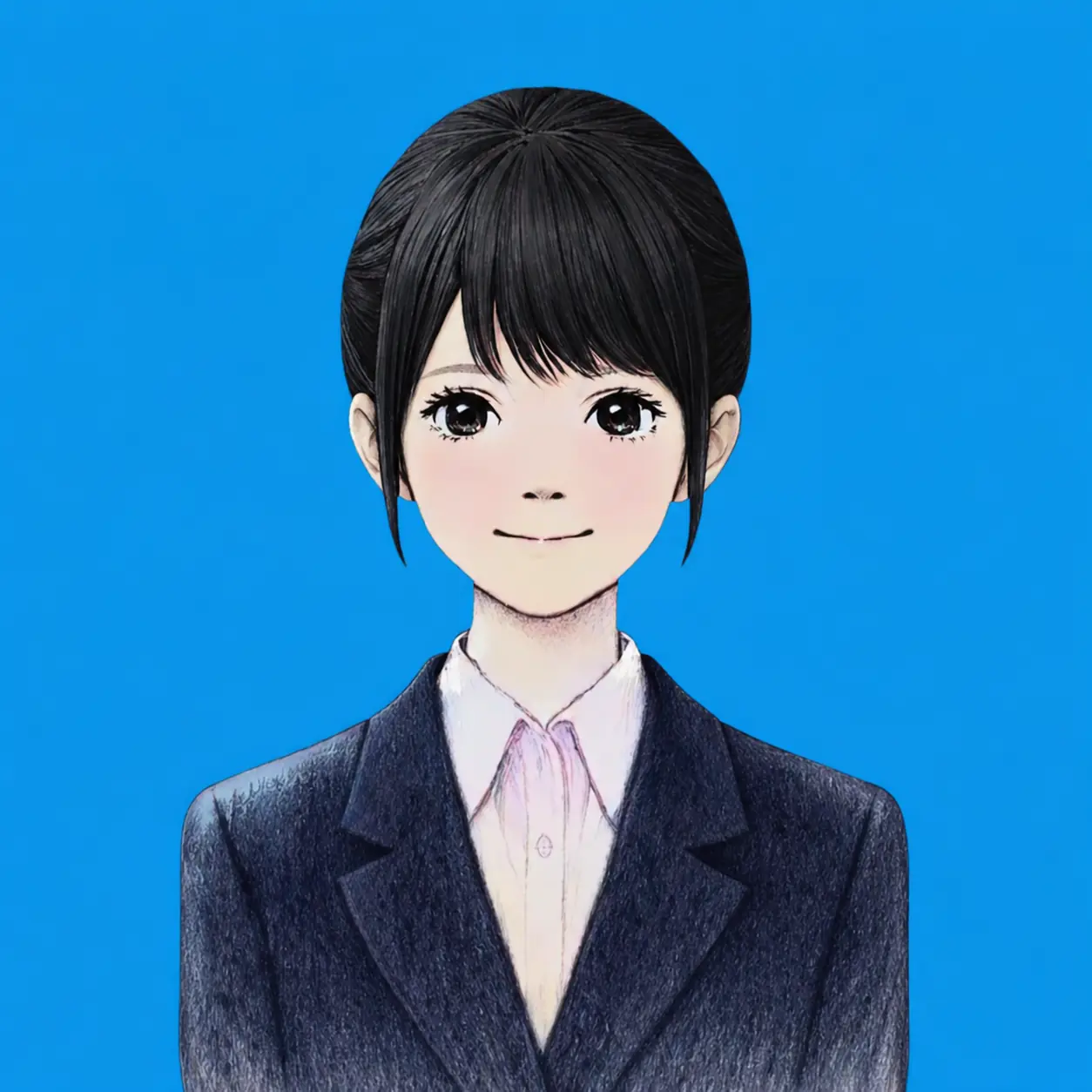
This time, we will read Shoyoroku Case 16, "Mayu Shakes His Khakkhara." We will explain the right mind after enlightenment.
Nanquan Puyuan and Zhangjing Huaiyun: Break Your Own Pride
From Shoyoroku, Case 16: Mayu Shakes His Staff
Mayu carried his khakkhara and went to Zhangjing. He walked around the Zen chair three times. He jiggled his khakkhara once. Then, he stood still.
Zhangjing: “Good, good.”
Next, Mayu went to Nanquan. He walked around the Zen chair three times in the same way. He jiggled his khakkhara once. Then, he stood still.
Nanquan: “Bad, bad.”
Mayu: “Zhangjing said ‘Good.’ Why do you say ‘Bad’?”
Nanquan: “Zhangjing is ‘Good,’ but you are ‘Bad.’ Your action is just moved by the wind. It will break at the end.”From Shoyoroku, Case 16: Mayu Shakes His Khakkhara
The characters in Mayu Shakes His Khakkhara: Mayu Baoche, Zhangjing Huaiyun, and Nanquan Puyuan
Key Point: The characters are 麻谷宝徹 (Mayu Baoche), 章敬懐惲 (Zhangjing Huaiyun), and 南泉普願 (Nanquan Puyuan). The story depicts the junior monk, Mayu, visiting his seniors, Zhangjing and Nanquan, respectively.
The characters are Mayu Baoche, Zhangjing Huaiyun, and Nanquan Puyuan. All three are disciples of 馬祖道一 (Mazu Daoyi). Among them, Mayu is the youngest disciple.
Who was Mayu Baoche?
- Mayu Baoche was one of eighty special disciples among the one hundred thirty-nine disciples of Mazu Daoyi.
- He lived on Mount Mayu in Puzhou (in Shanxi Province).
- We do not have records about what kind of person he was. However, several dialogues between Mayu and other monks remain today.
When Mayu asked Mazu Daoyi, “What is Mahaparinirvana?” Mazu Daoyi said, “Look at the water.” (Source: Daoyuan (Ed.). 景徳傳燈録 [Record of the Transmission of the Lamp], Vol. 17. SAT Daizokyo Database No. 2076.).
One monk asked Mayu, “The wind exists everywhere. Why do you use a fan?” Mayu said, “You know that the nature of wind exists everywhere. However, you do not know the truth that the wind fills all places.” The monk asked, “What is the truth that the wind fills all places?” Then, Mayu simply fanned himself with his fan (Source: 義雲和尚語録 [Recorded Sayings of Chan Master Yiyun], Vol. 1. SAT Daizokyo Database No. 2591.).
Who was Zhangjing Huaiyun?
The name of 章敬懷惲 (Zhangjing Huaiyun) has another form: 懷暉. There are several theories about how to read this name in Japanese. Some people read it as “kaiki,” some read it as “kaiun,” and some read it as “eki.” In literature from the Showa period, it was written as 懷惲 (Eun). I used that form as a reference.
He was a native of Tong’an in Quanzhou (Fujian Province), and his secular surname was Xie.
He attained enlightenment under Mazu Daoyi, but he shunned fame and fortune, choosing to live in seclusion. Despite this, people gathered around him, and his community flourished. In the tenth year of the Yuanhe era (815 AD), he reached the age of sixty and passed away. He was posthumously granted the title “Zen Master 大覚 (Great Awakening)” by Emperor Xianzong of the Tang Dynasty.
When a person asked Zhangjing about the nature of the mind, he replied, “Can you see the void before your eyes?” The person answered, “I know it is always there, but I do not attempt to see it myself.” Zhangjing then said, “Do not mistake the reflection for the reality.” When asked, “What do you do, Osho (Honorific title for a monk)?” Zhangjing brushed the air three times with his hand and said, “This is what it is,” adding, “You will understand this in time.” Thus, although Zhangjing inherited the teachings of Mazu, he rarely used the rough, vigorous actions characteristic of Mazu. He appeared to be a gentle and patient figure who taught and exhorted others with persistence (Source: Daoyuan (Ed.). 景徳傳燈録 [Record of the Transmission of the Lamp], Vol. 57. SAT Daizokyo Database No. 2076.).
Who was Nanquan Puyuan?
- During the Tang Dynasty, he lived at Nanquan Mountain, in what is now Anhui Province.
- Because his secular surname was Wang, he referred to himself as “Wang Laoshi” (Old Teacher Wang), and he was also called this by others.
- Although he had been diligent in studying the scriptures, he joined Mazu Daoyi, alongside Baizhang Huaihai and Zhizang, to devote himself to the practice of Zen.
Related Articles: Shoyoroku Case 9: Nanquan Cuts the Cat — Go Beyond Common Sense! An Extraordinary Leap Over Logic
Related Articles: Shoyoroku Case 6: Mazu’s White and Black — True Leadership Is Not Teaching, But the Leader’s Continuous Growth
What is The etiquette of India?: Mayu circled around Zhangjing three times
Key point: Circling three times around Zen chair of a superior is an etiquette derived from ancient India. It is a traditional practice to show respect by circling clockwise three times and then standing quietly in attendance, waiting for the other’s instruction. Upon circling Zhangjing three times, Mayu jingled his khakkhara once and stood straight and still.
Now, let us enter into the main case. Mayu carried his 錫杖 ( khakkhara, shakujo, monk’s staff) and went to see Zhangjing. He circled around Zhangjing’s Zen chair three times, jingled his staff once, and stood straight and still. khakkhara is one of the eighteen items carried by monks since the time of Shakyamuni Buddha.
- The Eighteen Possessions of a Monk
- Daily necessities
- 楊枝 (Youji): A wooden stick for cleaning teeth.
- 澡豆 (Souzu): Powder for washing the face and clothes.
- 瓶 (Hei): A container for water.
- 鉢 (Hatsu): A bowl for receiving food during alms.
- 手巾 (Shukin): A cloth for wiping the hands and face.
- 刀子 (Tousu): A small knife for cutting fruits and tools.
- 火燧 (Hiuchi): A flint and steel for making fire.
- 鑷子 (Sesshi): Tweezers.
- 繩床 (Joushou): A chair for rest.
- Clothing and bedding
- 三衣 (Sanne): The three types of Buddhist robes (Antarvasa, Uttarasanga, and Sanghati).
- 坐具 (Zagu): A cloth for sitting during worship.
- Tools for practice and religious items
- 錫杖 (Shakujo): Khakkhara, A staff for a practitioner.
- 香炉 (Kouro): A tool for burning incense.
- 漉水嚢 (Rokusuinou): A cloth bag for filtering water.
- 経律 (Kyouritsu): Books of sutras and precepts.
- 佛像 (Butsuzou): A statue of a Buddha for worship.
- 菩薩形像 (Bosatsugyouzou): A statue of a Bodhisattva for worship.
- Daily necessities
Source: Kumārajīva (Trans.). 梵網經 [Sutra of Brahma’s Net], Lower Scroll, “Chapter 10: The Bodhisattva Mind-Ground Precepts Spoken by Vairocana Buddha.” SAT Daizōkyō Database No. 1484.
The head of this khakkhara is fitted with a tin, pagoda-shaped ornament, from which smaller rings are hung on a larger ring; when the staff strikes the ground, it makes a jingling sound. Circling three times is an ancient Indian ritual; when visiting a superior, one is expected to walk around their Zen chair three times—moving from right to left—then wait quietly to the side for the superior’s instruction. It is said that the Japanese funeral custom of carrying a coffin around three times before placing it on the catafalque is derived from this very tradition.
What is the true intention of Zhangjing?: You still reek of Zen
Key point: Zhangjing said, “Good, good,” and he accepted Mayu completely. This was because Zhangjing accepted Mayu’s enlightenment. Mayu thought, “I got enlightenment.” Zhangjing gave a full high evaluation to Mayu. However, 万松行秀 (Wansong Xingxiu), a later commentator, gave a different comment. He said that Mayu still reeked of Zen. This means that Zhangjing also might say “Good” with irony.
Mayu visited Zhangjing. He walked around Zhangjing’s Zen chair three times. This was a traditional ritual to show respect to a superior. However, Mayu jiggled his khakkhara once in front of Zhangjing and stood still. This action showed his pride. He thought, “I got the true teachings of Mazu.”
Therefore, the gentle Zhangjing accepted Mayu with the words, “Good, good.” Wansong Xingxiu, a later commentator, made a comment. He said, “This is very like Zen.” However, he was actually laughing at Mayu. He meant, “You still reek of Zen.” This means that we do not know if Zhangjing really said “Good” from the bottom of his heart.
Why did Nanquan say “Bad”?: Mayu is stuck on his own pride.
Key Point: Mayu visited Nanquan. He had pride because Zhangjing praised him. However, Nanquan’s answer was opposite to Zhangjing’s answer. Nanquan denied Mayu completely, and he said, “Bad, bad.” Mayu could not understand Nanquan’s words. Mayu kept his pride in his enlightenment, and that was the problem.
Mayu had pride because Zhangjing praised him. With high spirits, he visited Nanquan next. He did the same actions as before. Then, he stood still in front of Nanquan. He wanted to say, “How about my action, Osho?”
Nanquan’s answer was opposite to Zhangjing’s answer. Nanquan denied Mayu completely. He said, “Bad, bad.” Nanquan denied him with his words, but we do not know his real mind.
Mayu could not accept Nanquan’s words. He approached Nanquan and said, “Zhangjing said ‘Good.’ Why do you, Nanquan Osho, say ‘Bad’?”
Wansong says that it is like a dead person in a coffin who opens his eyes wide and glares. This metaphor, 棺木裏の瞠眼 (staring eyes in a coffin), is common in Zen books. Its opposite phrase is 枯木裏の龍吟 (the dragon’s roar in a withered tree). These phrases mean to find life in death. Nanquan says, “Zhangjing is good, but you are bad.” This is because Mayu is still stuck on his own pride.
Wansong also quotes Yunmen and says, “It is adding frost to snow.” Yunmen said, “It is like adding frost to snow, making a dead person in a coffin open his eyes, and putting burning moxa on an old scar.” This means that words are unnecessary because the truth cannot be explained by words (Source: Daoyuan (Ed.). 景徳傳燈録 [Record of the Transmission of the Lamp], Vol. 19. SAT Daizokyo Database No. 2076.).
What is the true intention of Nanquan?: Break your own pride
Key Point: Nanquan said “Bad” and denied Mayu. The reason was that Mayu stuck to his pride. He did not stick to enlightenment itself, but he stuck to his pride in his enlightenment.
In Zen, training after enlightenment is more difficult than training to get enlightenment. When you get enlightenment, you must break your pride. You must not think, “I got enlightenment.”
Nanquan also said, “Your action is moved by the wind, and it will break at the end.” This means that the way up is the same as the way down. In Zen, “Good” and “Bad” are both parts of the truth. To accept both is the true way of Zen. In short, Mayu is “good” because he attained enlightenment, but he is “bad” because he has pride. In Zen, the training after enlightenment is very difficult.
円覚経 (Sutra of Perfect Enlightenment) says, “Heat returns to fire, and movement returns to wind. You should know that there is no true substance in the end.” Like this, your action is moved by the power of wind, and it will disappear because it has no true substance (Source: Buddhatrāta (Trans.). 大方廣圓覺修多羅了義經 [Sutra of Perfect Enlightenment], SAT Daizōkyō Database No. 0842.)
In this way, Nansen’s blunt dismissal—declaring ‘Bad, bad!’ and asserting that he was ‘nothing more than a thing blown about by the force of the wind’—shattered Mayoku’s proud Zen into dust.
The Core of Mayu Shakes His Khakkhara: Break your pride after enlightenment
- When you get enlightenment, you must break your pride. You must not think, “I got enlightenment.”
- Training after enlightenment is more difficult than training to get enlightenment.
-
Traditionally, people explain Zen training with two sides.
The first side is “向上門” (Kojo-mon, the way of going upward). This is a way to get enlightenment through personal training.
The second side is “向下門” (Koge-mon, the way of going downward). This is a way to use that enlightenment in real ordinary life.
My Experience: First, you need to reek of Zen
Key Point: In Zen, it is important to use the mind of enlightenment in daily life. However, there is a big difference between two people. One is an enlightened person who uses daily life. The other is an ordinary person who just lives daily life. Their levels are completely different.
In Shoyoroku, there are stories about training after enlightenment, like this story. Zhangjing said “Good” to Mayu because Mayu got enlightenment. For the same reason, Nanquan said “Bad” to Mayu.
We do not have enlightenment yet. When we read this story, we can learn a good thing if we think, “I see. Training continues even after enlightenment.” However, sometimes we make a mistake. We may think, “I see. Mayu is bad. We must not show off.”
For example, at the Zen Dojo where I trained, some people laughed at Zen Freaks. They said, “You must not show off in Zen. You are showing off now.” Because of this, finally, all the people in Zen Dojo stopped doing zazen hard.
In Zen, it is important to use the mind of enlightenment in daily life. However, many people misunderstand this. They think, “Then, we just need to live our ordinary daily life.”
There is a big difference between two people. One is an enlightened person who uses daily life. The other is an ordinary person who just lives daily life. Their levels are completely different.
There is a big difference between two people. One is an enlightened person who uses daily life. The other is an ordinary person who just lives daily life. You must remember this difference. If you do not remember it, you will just laugh at Mayu and feel satisfied, and you will learn nothing.
How to use Zen teachings in modern life: Harmony comes after personal growth
Key Point: Harmony without trying to improve oneself is just a bad thing. If you give up your personal growth, harmony has no value.
In Japanese organizations, people have believed for a long time that harmony is the best virtue. However, in modern Japan, people often choose total harmony before great individuals because they want to keep harmony. Therefore, when there is an excellent person, other people sometimes make the person average with quiet pressure. Especially, women often receive this pressure.
This happens because the Japanese economy became stable after the bubble economy. People could live just by keeping harmony and staying friendly with everyone.
Originally, true harmony comes after each person’s effort. If people just rely on harmony without their own effort, the group will become bad. Harmony without trying to improve oneself is just a bad thing. In this Zen story, there is a danger. Some people may explain this story poorly and say, “You should not stand out for harmony.”
 Aoiちゃん
Q&A
- Q: Why did Zhangjing Huaiyun praise Mayu Baoche, but Nanquan Fuguan deny him?
- A: Because Zhangjing accepted the fact itself that Mayu got enlightenment. However, Nanquan took a step forward. Nanquan sharply pointed out Mayu's immature mind. Mayu stuck to his enlightenment and lived in his pride.
Mind Weather before AI comments?
 Grok
 GPTさん
 OskardさんAoiちゃん
 Gemini君
 Claude様